The fire striker is an ancient tool for starting fires, whose name comes from its resemblance to a curved sickle. When struck against flint, it generates sparks that can ignite tinder. In northern rural areas, particularly in the 1950s and 1960s, it was quite popular. However, it’s now a rarity, and only the elderly reminisce about it fondly as a cherished historical artifact.
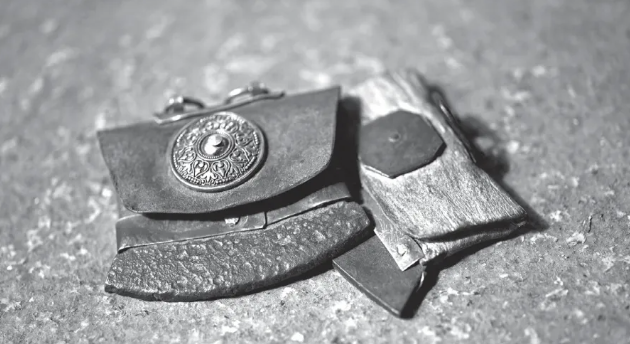
The fire striker consists of three primary components:
Flint: Typically, flint or “mā yá” stone is used in the region, which can be collected from riverbeds. This stone is a crucial element as it generates sparks when struck by steel.
Tinder: In this area, a perennial herb from the grass family, colloquially known as “bái bái” or “dì bǎi bǎi,” is used. The best time to harvest this plant is after the beginning of autumn. The leaves are picked and left to dry either in the shade or under the sun, then rubbed between hands or crushed with stones to create a fluffy, fibrous mass. This dried tinder, called “huǒ gé” locally, is what catches the sparks.
Fire Striker: The fire striker itself is typically a small steel bar, not too hard, that has been shaped into a curved sickle form by a blacksmith. After heat treatment, it becomes the tool used to strike the flint and generate sparks. For those who appreciate fine details, some fire strikers have intricate auspicious patterns engraved on the steel and are fitted with leather pouches to store the flint and tinder, preventing them from being lost or dampened. These pouches might be adorned with gold or silver inlays, gemstones, and beautiful clasps for easy opening and closing. The fire striker may even be attached to a decorative string or a jade or agate bead for both practical use and aesthetic appeal.
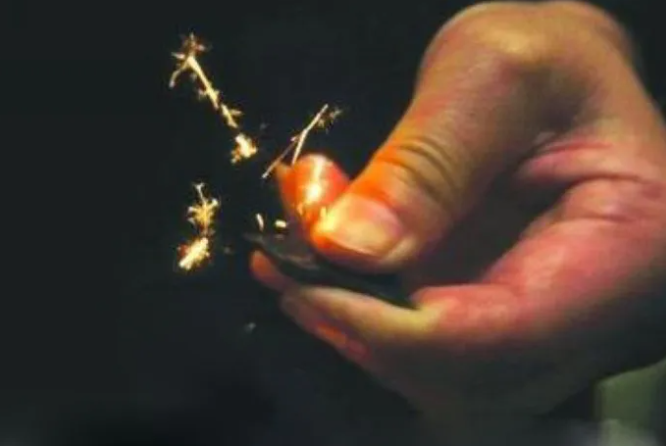
There are many variations of fire strikers, as they are handmade and not identical. The main difference lies in the quality of the pouch that holds the flint and tinder. The intricacy of the design and the materials used in the construction of the fire striker can also vary according to the owner’s social status and the region. Wealthier people might have more ornate and finely crafted fire strikers, while common folk might use simpler versions made with locally available materials.
The principle behind the fire striker is friction-based fire starting. By striking the flint with the fire striker repeatedly, it generates heat. A powerful downward strike on the flint creates sparks, which ignite the tinder placed underneath. Though seemingly primitive, the fire striker is highly practical and has a significant advantage—it is portable and can be used in windy or rainy weather, unlike modern methods of fire starting.
The fire striker was once a common household item, especially in rural areas, and a necessary tool for daily life. It was widely used by workers and farmers during their daily routines to start fires for cooking, heating, and lighting. This tool remained an essential part of rural life until the advent of matches and lighters, which gradually replaced it. In fact, even as late as the 1970s, some people in remote rural areas continued to use fire strikers.
Growing up, I remember how my mother used “bái tóu ér qū dēng zǐ” (a type of matchstick) to light the fire for cooking. These matches, though convenient, were not entirely safe. Later, safety matches were introduced, with red-brown or green heads that were safer to use, a design still in use today. Then, gas lighters became popular—composed of carbide, sandpaper, cotton, gasoline, and a metal shell. While convenient, these lighters required refills and could be unreliable if the gas ran out. Over time, electronic lighters powered by butane gas became the standard.
In the 1950s and 60s, men in rural areas still used fire strikers instead of expensive matches or lighters. There were several reasons for this: first, matches were a scarce commodity, mainly allocated for lighting and cooking; second, although a box of matches was inexpensive, they still cost money; third, while gasoline lighters were trendy, they required frequent refilling with carbide and gasoline, and sometimes failed to light when the fuel ran out, which also posed safety risks. The fire striker, on the other hand, was simple, required no additional cost, and was made from readily available materials.
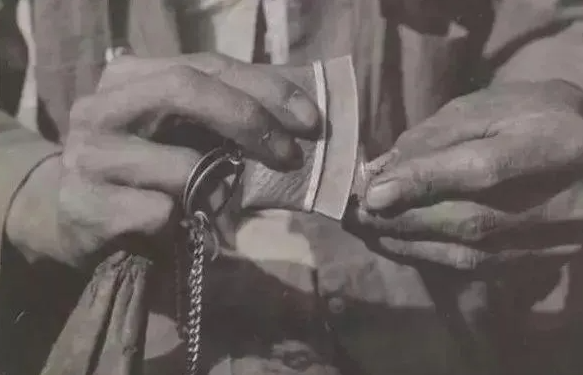
In rural areas, it was common to see elderly men carrying a fire striker along with their smoking pipes. The striker, worn with age and use, was often smooth and shiny. Smoking involved a ritual: first, they would place a small amount of tobacco in the pipe, press it down with their left hand, and then light it using the fire striker. They would scrape the flint with the striker, generating sparks that ignited the tinder. As the fire caught, they would blow gently on it to fan the flames and then press the lit tinder to the pipe’s bowl, taking deep, satisfying puffs of smoke.
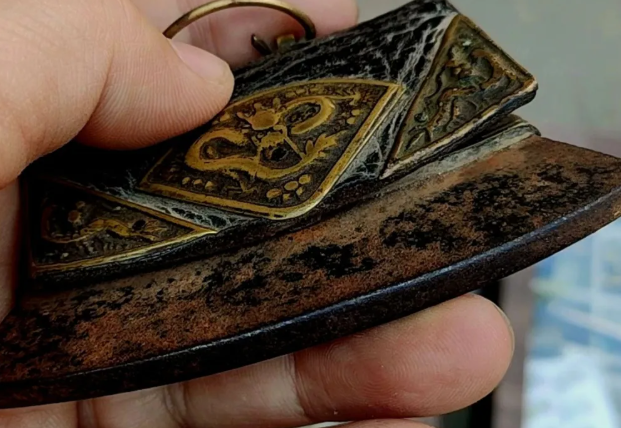
To conserve the fire striker’s use, many smokers would keep the embers from their last smoke and reuse the lit tinder for the next session. It was common to see people exchange fire with each other by lighting their pipes from one another. Whether it was lighting tobacco pipes or water pipes, the fire striker was indispensable.
Throughout human history, various methods of fire-starting have been used, from striking stones to drilling wood, and later the introduction of matches, lighters, and electric ignition. For centuries, the fire striker was an essential tool for daily life. Today, while fire strikers have been largely replaced by modern conveniences, they remain a symbol of human ingenuity and resourcefulness, reflecting the evolution of our relationship with fire.
The fire striker is now more of a memory than a tool of daily use, but it still stands as a testament to human creativity, innovation, and the simple joys of life. It represents a chapter in history when survival depended on such practical tools, and it is part of the collective memory of rural life. Today, few people are familiar with it, but those who remember still cherish it as a piece of cultural heritage—a symbol of simpler times when necessity was the mother of invention.