In April 1938,
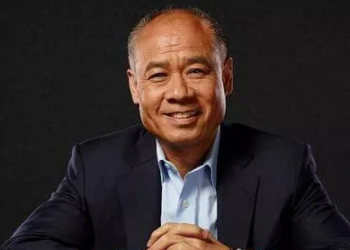
Hou Xianglin made “the most important decision of his life”—
He secretly joined the Communist Party of China.
During the War of Resistance Against Japan,
Hou Xianglin devoted himself to anti-Japanese and national salvation activities.
Later,
Following the Party’s directives,
He worked in the southwest, engaged in the production of liquid fuels from coal and vegetable oil.
In December 1944,
Hou Xianglin, upon the assignment of the Party organization,
Self-funded his study abroad in the United States.
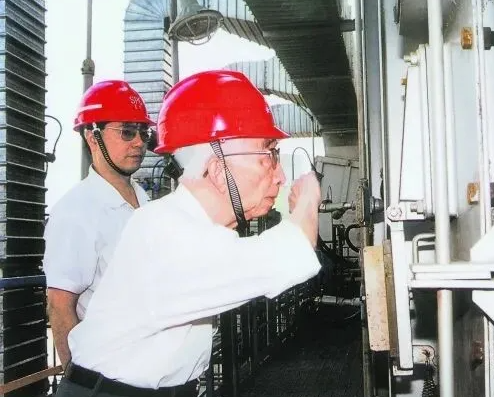
During his time in the U.S.,
He participated in and organized patriotic activities for Chinese students,
Forming associations to support national causes.
From 1945 to 1948,
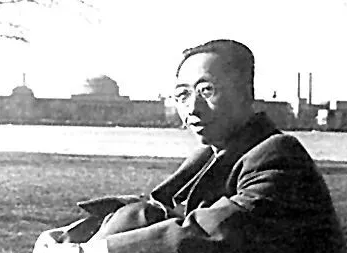
Hou Xianglin studied at Carnegie Institute of Technology’s Department of Chemical Engineering,
Where he earned his doctorate degree.
In early 1949,
Hou Xianglin became an associate researcher at the Massachusetts Institute of Technology (MIT).
In the same year,
Together with several other Communist Party members,
He initiated the founding of the “Association of Chinese Scientific Workers in America” in Boston.
The association attracted over 300 scientists and scholars,
Most of whom later became pioneers or leaders in various disciplines in the newly founded People’s Republic of China.
Hou Xianglin was elected as the executive officer of the association.
Hou Xianglin remained resolute in his decision to return to China,
Despite the opportunity to continue his position as an associate researcher at MIT,
He chose to forgo renewing his contract.
In 1950,
After a journey that lasted over a month,
Traversing multiple countries,
He finally returned to a war-torn and rebuilding homeland.
Upon his return,
Hou Xianglin was appointed as a researcher at the Fuel Research Laboratory,
And also served as a professor in the Department of Chemical Engineering at Tsinghua University.
In order to expedite the development and construction of the microsphere silica-alumina cracking catalyst plant,
Hou Xianglin prioritized certain aspects of the project alongside the “Two Bombs, One Satellite” program.
This strategic alignment allowed for the simultaneous advancement of laboratory research and the early initiation of a medium-scale pilot plant for catalyst production.
Within just five years,
China successfully achieved the industrialization of microsphere silica-alumina cracking catalysts,
With the completion of a plant capable of producing 8,000 tons per year.
To address the backwardness of domestic refining technology,
Hou Xianglin led the successful development of the “Five Flowers” refining technologies—
including Fluid Catalytic Cracking, Catalytic Reforming, Delayed Coking, Urea Dewaxing, and related catalysts and additives.
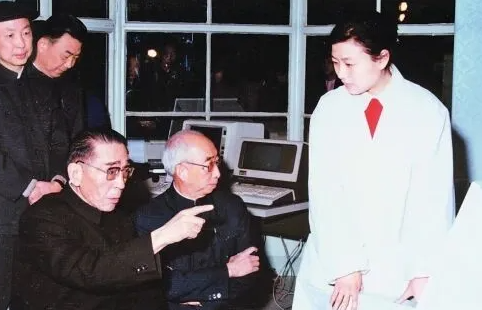
These innovations quickly brought China’s refining technology up to the global standards of the early 1960s,
ending the era of reliance on imported petroleum products.
This breakthrough overcame the blockade from outside China and significantly boosted the growth and development of China’s refining industry.
With the success of the “Five Flowers” technologies,
China also independently built its first-generation 1.2 million tons per year refinery.
Simultaneously, a team was cultivated in research, design, construction, and production,
laying a solid foundation for the future development of the refining industry.
In the early 1960s,
a nationwide “oil crisis” spread across China.
At the time, the issue of aviation kerosene erosion became a major challenge.
Hou Xianglin organized efforts and collaborated with relevant domestic research institutions
to develop aviation kerosene.
After numerous trials, significant progress was made in solving the issue.
Hou Xianglin proposed an idea that shocked many:
“Could it be that our fuel is too pure in the refining process, which is causing the erosion?”
“Under certain conditions, what is good can become bad, and what is bad can become good. This is dialectics.”
Hou persuaded the experimental team to add a substance once considered the culprit of erosion—sulfur—and test it.
The experiment was an immediate success.
Soon after,
domestic aviation kerosene and the accompanying “33# additive” were successfully developed.
After that, Hou Xianglin was entrusted to lead the development of three special lubricants for the nuclear industry.
The only explicit technical requirement was that they had to resist corrosion by the element fluorine. Beyond that single demand, there were no other specified technical indicators or performance requirements—no reference designs, no prior manuals, no proven recipes to follow. What the team had to start with amounted to almost nothing: merely a few samples of fluorine‑resistant oils, whose exact elemental composition and molecular structures were unknown.
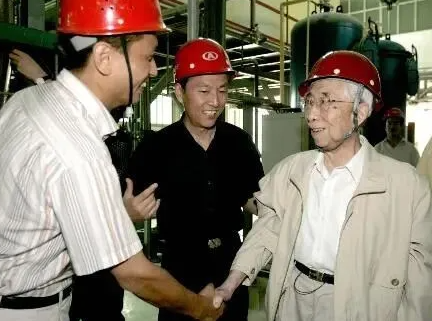
The assignment could only be described as hazardous. The reagents and working materials that contained fluorine were highly toxic, fiercely corrosive, and prone to violent explosions. Available protective equipment and safety facilities were rudimentary at best. In the face of such danger and uncertainty, Hou did not delegate from afar—he went to the laboratory every day and worked side‑by‑side with the researchers, personally participating in experiments and troubleshooting problems as they arose.
By the end of 1962, the team had succeeded: they developed perfluorocarbon oils and a range of other lubricants and greases suitable for the task. With this breakthrough, China joined the very small group of countries capable of producing perfluorocarbon oils. Crucially, this technical achievement helped satisfy the nation’s urgent material needs for its atomic‑energy program.
This episode is not only a record of technical success; it also epitomizes the combination of scientific courage, hands‑on leadership, and collective perseverance that turned a high‑risk, under‑specified national assignment into a concrete, strategically vital capability.
Hou Xianglin also led his team to successfully develop a variety of lubricants and greases required for missiles and long-range rockets, even in the face of adversity. This work was critical to ensure the success of China’s first missile launches, as well as the successful deployment of various carrier rockets and artificial satellites.
In addition to his technical achievements, Hou, along with prominent scientists such as Shi Changxu, Zhang Guangdou, Wang Daheng, Zhang Wei, and Luo Peilin, jointly proposed to the central government the idea of establishing a national academic institution focused on engineering and technology.
On June 3, 1994, the Chinese Academy of Engineering was officially founded, with the six scientists, including Hou, among the first 96 academicians elected. This institution has since played an essential role in advancing China’s technological capabilities.
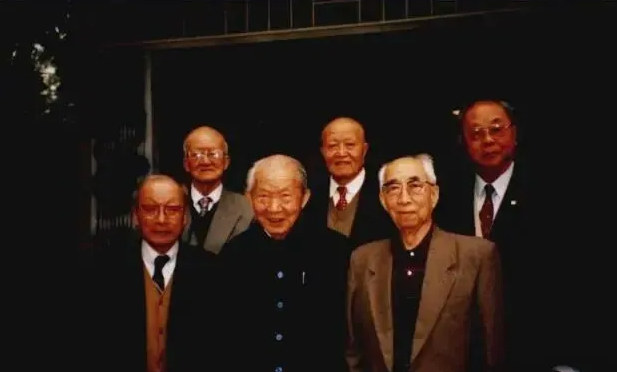
Now, 31 years later, the Chinese Academy of Engineering continues to be at the forefront of national development, embodying Hou Xianglin’s vision for an institution that would focus on engineering excellence to drive China’s technological and industrial progress.
In May 2003, at the age of 91, Hou Xianglin led the research on China’s sustainable oil and gas resources strategy. After more than a year of investigation and study, he conducted a scientific analysis of the current situation and the supply-demand development trends of both China’s and the world’s oil and gas resources from a forward-looking and strategic perspective.
He proposed a comprehensive strategy for the sustainable development of China’s oil and gas resources, outlining guiding principles, strategic measures, and policy recommendations. This research became a critical reference for the energy industry’s strategic decision-making, serving as an important basis for China’s “11th Five-Year Plan” and the realization of the goal to build a moderately prosperous society in all respects.
His work played a pivotal role in shaping the country’s energy policies, ensuring that China could continue to develop its oil and gas resources in a sustainable manner to support the nation’s growth in the coming decades.
In times of turbulent crises, you bow your head, willingly becoming the silent pillar of support.
In an era of poverty and struggle, you stand tall, becoming the nation’s greatest wealth.