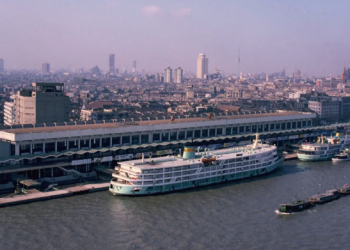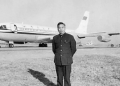
In 1984, Deng Xiaoping, who had sounded the trumpet for reform and opening-up, made the historic decision to visit the South for the first time.
In the year prior, the development of Shenzhen as a Special Economic Zone had been the subject of intense debate, with criticism and opposition raging. Throughout the journey, Deng Xiaoping remained silent, refraining from making any public statements or revealing his stance. Even during his visits, he stayed completely composed and gave nothing away.
It wasn’t until after returning to Guangzhou from his visit to Zhuhai that Deng Xiaoping, with a wave of his hand, wrote a single line: “Shenzhen’s development and its experience have proven that our policy of establishing economic zones is correct.”
In 1984, Deng Xiaoping set the course for China’s economic development, signaling the dawn of a new era. In the words of finance writer Wu Xiaobo, 1984 was a “year of fervor and restlessness,” with people testing the waters of “going to sea” in business. The appearance of numerous private enterprises led Wu to define this year as the “Year One” of Chinese entrepreneurship.
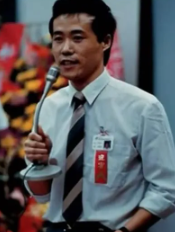
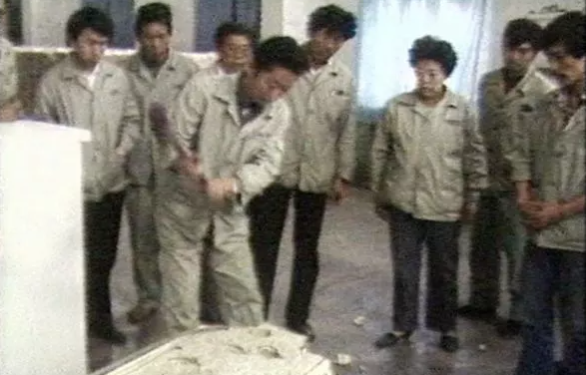
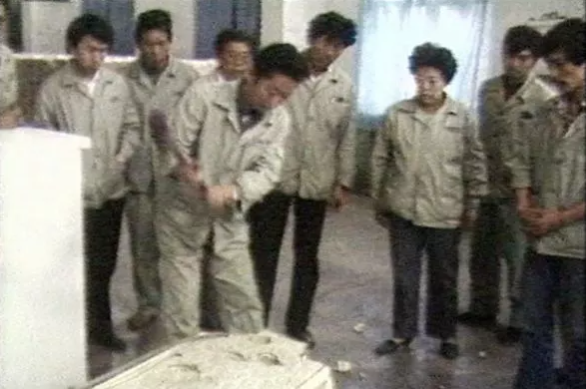
That year, Zhang Ruimin was 35 years old. While others were busy launching into business, riding the waves of the times, Zhang was raising a hammer at Qingdao Refrigerator Factory. In one decisive stroke, he destroyed 76 defective refrigerators, an action that crushed the hearts of many workers but also put a nearly bankrupt factory back on track. Today, when people think of “the hammer,” they might recall the troubled Hammer Phone brand, and the idealistic, yet life-beaten, Luo Yonghao. But to many of Qingdao’s older residents, the word “hammer” represents the vitality of a business, a commitment to consumers, and a unique rhythm in the era of reform and opening-up. Known for his self-challenging nature, Zhang Ruimin, 34 years ago, embodied the famous line cherished by many intellectual youths: “Raise the hammer, live to die.”
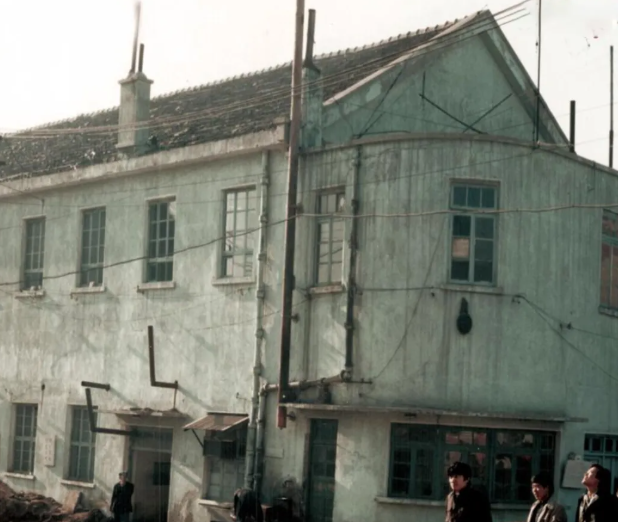
In the transformative era of reform, Qingdao Refrigerator Factory was struggling. With poor management, outdated equipment, and debts of 1.47 million yuan, it had seen three plant directors leave in just one year. On the eve of bankruptcy, Zhang received an urgent order to take over. Despite being mentally prepared, the factory’s condition shocked him: all that remained were IOUs, the factory floor was littered with trash, employees were disinterested, and some even stole products. Initially, few believed the new factory director could revive the business. Veteran workers told him that no matter what he did, it would be hard to bring the factory back to life. But Zhang refused to accept defeat. Upon taking office, he immediately implemented a “13-point military regulation” to address the factory’s chaotic state. Workers who were lazy or misusing company resources were immediately dismissed. As the market situation worsened, Zhang, known for his sharp insight, decided to focus on product quality. He believed that quality could be the lifeline of the factory, and a good reputation could either save or destroy the business.
Before the infamous “refrigerator smashing event,” many advised Zhang to distribute the substandard products to workers as a favor. After all, in those early years, a refrigerator cost as much as 800 yuan, equivalent to two years’ wages for the workers. Yet, these “well-meaning suggestions” were shattered just like the 76 refrigerators, with Zhang symbolically hammering the message: Product quality is life. Four years later, Haier products won the National Quality Gold Award. With this recognition, a new domestic brand took flight, propelled by the winds of reform.
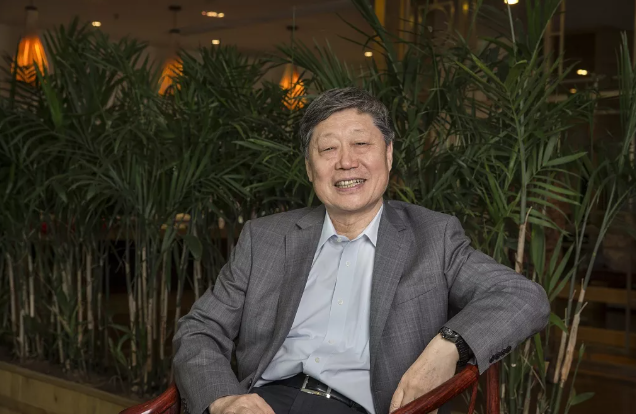
Zhang Ruimin is undoubtedly one of China’s most successful entrepreneurs, especially in terms of international expansion. But reaching that point was only the epilogue; the real story lies in the journey. After ten years of hard work, Haier rose to the forefront of China’s white goods industry. By the time China was preparing to join the WTO, the “wolves are coming” rhetoric was rampant. Many feared that the influx of foreign goods and investment would spell disaster for China’s industries. Zhang, however, scoffed at these fears. He firmly believed that “to dance with wolves, you must become one.” Only by competing against Western giants could Chinese products truly become global brands.
In contrast to many state-owned enterprises that became mere contract manufacturers for foreign companies, Zhang Ruimin made a bold decision: He would sacrifice immediate profits to take on the giants. He announced plans to build Haier’s industrial park in South Carolina, USA, and set up a design center in Los Angeles, with a marketing center in New York, hiring over 200 local employees. This news caused a stir, and many media outlets criticized Zhang’s move as reckless. They argued that China’s advantage lay in its vast market and low labor costs. Yet Zhang pressed on, insisting: Haier must establish its own brand; we will never outsource manufacturing. This led to eight years of losses in the U.S. market. Zhang knew that building a local brand would come with over 10 billion yuan in losses. However, he also understood that a well-established brand in the U.S. was priceless. This sense of pride and honor became the true legacy of Chinese manufacturing.
Over 20 years of struggle in overseas markets, Zhang slowly but surely gained favor with foreign consumers, expanding his market share. Once ridiculed, Haier was now a force to be reckoned with on the global stage. As Haier became a global leader in the white goods industry, even those who had once doubted Zhang had to admit his vision was extraordinary.
What is even more remarkable is that, in the process of acquisition, Zhang Ruimin exported China’s unique management experience. After Haier acquired GEA, it implemented its “One Person, One Product” management model, which led to a 1.5-fold increase in the company’s performance within a year, the best in the past decade. Zhang’s management approach is now seen as a global trend.
Zhang Ruimin’s generation of entrepreneurs shares a few key traits: diligence, boldness, a spirit of sacrifice, and a refusal to indulge in pleasure. Despite running a company with over 200 billion yuan in annual revenue, Zhang still lives in his modest two-bedroom apartment. Unlike other entrepreneurs, Zhang maintains the same “stubbornness” in his personal life: no smoking, no drinking, no socializing, and no involvement in exclusive circles. Even at nearly 70 years old, he rarely uses a smartphone, spending most of his free time reading. “I can finish 100 books in a year,” a habit he has maintained for decades. These decades, seemingly disconnected from pop culture, have nourished Zhang’s mind, keeping it sharp and visionary.
Today, Haier is virtually unrivaled globally. But standing atop the industry, Zhang Ruimin feels a sense of coldness at the peak. Resting on past laurels is fatal, whether for an individual or a company. Like Zhou Botong practicing with his own hands or Lin Qingxia in East Meets West training with her shadow, Zhang Ruimin turned his gaze inward when he found no external challengers. He embarked on a complete overhaul of Haier, bringing down the management system he had built, calling all company leaders to his office, removing their positions, and encouraging them to start their own ventures. This bold restructuring, which flattened the company hierarchy and encouraged entrepreneurship within Haier, was a revolutionary move in corporate history. Some saw it as reckless; others said it was disguised downsizing. When asked about the controversy, Zhang, with decades of business experience, replied, “If I still care about what others think, would this reform be possible?”
In a sense, this reform allowed Zhang to almost rebuild Haier from scratch. Haier shifted from being a traditional enterprise to a platform that fosters entrepreneurs. Today, it is an ecosystem with over 2,000 small and micro enterprises, with Haier serving as a resource platform, providing funding, resources, and support. Through this disruptive approach, Zhang Ruimin transformed a massive corporation into a flexible, independent network of units, all aligned with a common goal.
As IBM’s former legendary CEO Lou Gerstner once said, “You are the bravest one among our generation.” Zhang’s radical reform is still influencing the business world today, as he introduces the concept of “link clusters” to respond swiftly to customer demands and create a highly adaptable business model. Haier is now a leader in the Internet of Things, continuing its trailblazing innovation and changing the business landscape.
If Zhang Ruimin had not existed, what would Haier be today? The most agreed-upon answer is: Without Zhang, Haier would not be where it is today. Now, Haier stands as a rare company in the world, embodying Zhang’s revolutionary spirit. Even with global success, Zhang still says, “Haier is only about entrepreneurship, never about maintaining.” In 2018, Haier’s revenue exceeded 200 billion yuan, and it has nearly a billion users worldwide. Despite its size, this corporate giant continues to run at full speed, with its groundbreaking “One Person, One Product” management philosophy, IoT innovations, and disruptive company revolution.
Zhang Ruimin’s foresight and disruptive spirit are what make him most admirable.