As 2025 quietly arrives, time once again slips through our fingers—swift as an arrow, steady as the turning of the seasons. Almost without noticing, humanity has already walked through one quarter of the twenty-first century.
In the 1980s, anticipation for the new millennium was one of the era’s most widespread collective longings. Across the streets and alleys of Shanghai, uplifting slogans rose everywhere, carrying the spirit of a city ready to embrace the future.
Today, in the year 2025, when we look back across the forty years that have passed along both banks of the Huangpu River, it feels as if a time tunnel opens before us, pulling us back into that spirited age. Life was awakening; the city’s pulse beat vigorously with the hopes and dreams of countless people.
In 1985, China entered the final year of the Sixth Five-Year Plan for National Economic and Social Development of the People’s Republic of China (1980–1985)—commonly known as the “Sixth Five-Year Plan.” For Shanghai, it was a pivotal moment, a year that connected the early phase of Reform and Opening-up with the city’s future trajectory.
Back in September 1982, the 12th National Congress of the Communist Party of China put forward the nation’s overall goals and strategic blueprint for economic development through the end of the 20th century. The “Sixth Five-Year Plan,” following the landmark First Five-Year Plan, became one of China’s relatively complete planning frameworks. It guided the national economy toward a stable and healthy path after a period of adjustment and restructuring.
In alignment with central directives and the requirements of the Shanghai Municipal Committee of the CPC, the Shanghai Municipal Government convened numerous meetings to draft and refine the city’s version of the “Sixth Five-Year Plan.”
As the economy advanced and society progressed, the original plan evolved into the Shanghai Plan for National Economic and Social Development, incorporating not only economic objectives but also social undertakings. This renewed version was formally approved in April 1983 at the First Session of the Eighth Shanghai Municipal People’s Congress.
The guiding principle of the “Sixth Five-Year Plan” was clear and resolute: to advance firmly toward the strategic goal of achieving a twofold increase in total industrial and agricultural output. This required unwavering adherence to the policy of “adjustment, reform, rectification, and improvement,” while addressing the various obstacles hindering economic development.
The plan emphasized shifting all economic work onto a trajectory centered on improving efficiency, relying on scientific and technological progress, strengthening both domestic linkages and international engagement, and promoting modernization through structural adjustments and development initiatives. Its overarching aim was to ensure solid and sustained industrial growth, steady expansion of domestic and foreign trade, fulfillment of national fiscal responsibilities, and continual improvements in people’s living standards year after year.
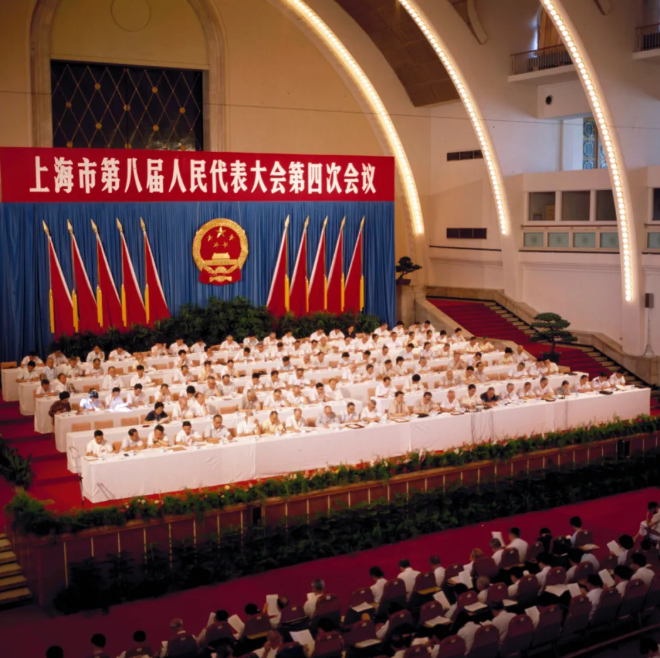
In May 1984, after the central government decided to further open Shanghai along with 14 other coastal port cities, the Shanghai Municipal Committee of the Communist Party of China and the Shanghai Municipal Government resolved to seize this historic opportunity and launch a new phase of opening-up.
Their overarching policy was articulated as follows: “Root in the city itself, rely on the strength of the entire nation, face the Pacific, and connect with the whole world.”
The objective was clear and ambitious: to accelerate the technological upgrading of old enterprises by leveraging foreign capital, foreign technologies, and access to international markets; to fully utilize and continuously enhance Shanghai’s overall urban functions; and to carry out multidimensional opening-up toward both the nation and the world, thereby further expanding the city’s presence in global markets.
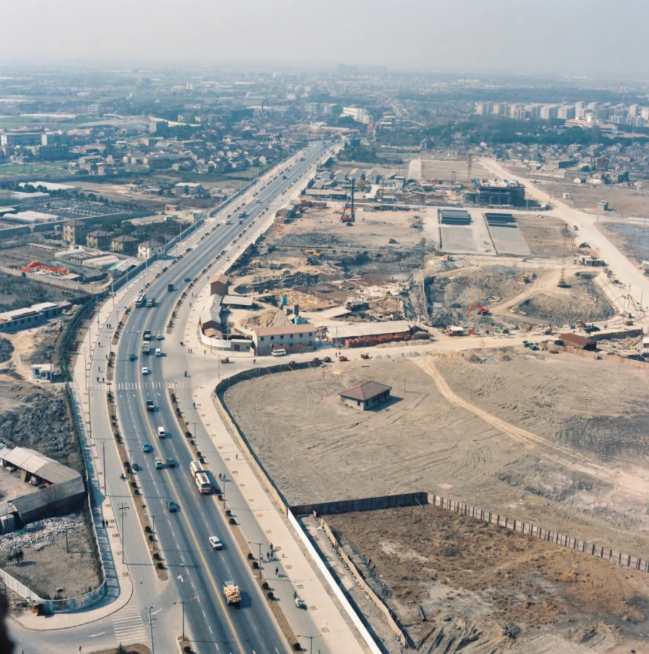
In December 1984, the Shanghai Municipal Government and the State Council’s Research Group on the Transformation and Revitalization of Shanghai jointly submitted to the State Council a document titled “Outline Report on Shanghai’s Economic Development Strategy.”
The Outline proposed that Shanghai should adopt the following strategic guidelines:
(1) Open up to both domestic and international markets, acting as a bridge that connects China with the world.
(2) Widely introduce advanced technologies and accelerate the targeted upgrading of traditional industries.
(3) Prioritize the reverse development of new technologies and foster emerging industries.
(4) Develop the “tertiary sector” and provide services to the entire nation.
(5) Combine the gradual renovation of old urban districts with the proactive construction of new urban areas.
(6) Strengthen spiritual and cultural development while advancing socialist material progress.
On February 8, 1985, the State Council forwarded the Outline Report submitted by the Shanghai Municipal People’s Government and the Research Group on the Transformation and Revitalization of Shanghai, issuing a formal notice emphasizing that transforming and revitalizing Shanghai was a matter of national significance connected to China’s Four Modernizations. Under new historical circumstances, Shanghai’s development needed to follow a new path of transformation and rejuvenation, fully leveraging the multifunctional role of a major central city. The goal was to build Shanghai, by the end of the century, into an open, multifunctional, structurally optimized, technologically advanced, and highly civilized socialist modern metropolis.
Regarding industrial restructuring, Shanghai took the market as its starting point and implemented the “Six Priorities” for its light textile industry—priority in the supply of raw materials, fuel, and electricity; priority in tapping potential, innovation, and upgrading; priority in capital construction; priority in bank loans; priority in foreign exchange and technology import; and priority in transportation. These measures accelerated product upgrades and expanded the production of high-quality branded daily consumer goods. Heavy industry, meanwhile, was directed toward serving the technological upgrading of the light textile sector and agriculture. Shanghai also adjusted the economic structure of suburban rural districts, stabilized grain production, and promoted integrated and coordinated development across agriculture, forestry, animal husbandry, sideline production, and fisheries.
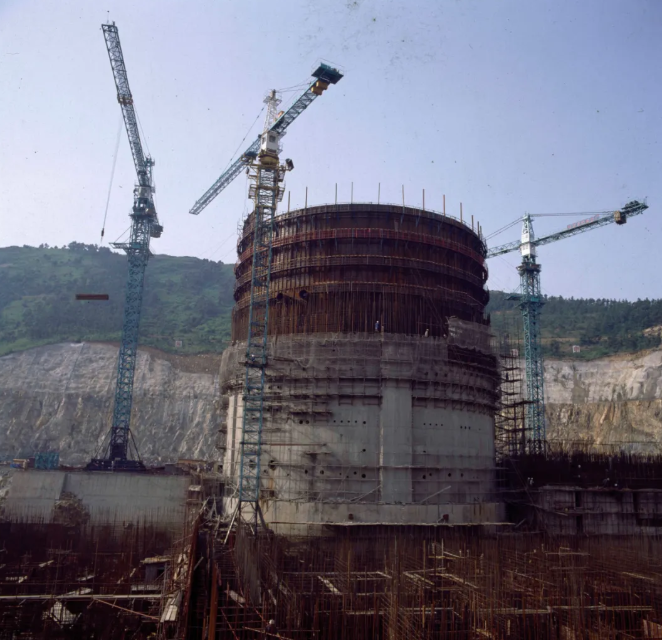
The year 1985 also marked the commencement and completion of several major projects. In December 1980, following the central government’s policy of adjusting the national economy, the construction of the Baoshan Iron and Steel complex (Baosteel) had once been suspended. In August 1981, the State Planning Commission and the State Construction Commission jointly issued a notice reclassifying Phase I of Baosteel as a continued construction project. By September 1985, all Phase I facilities—except the seamless steel pipe project—had been completed and put into operation. The Shanghai Petrochemical complex’s 300,000-ton ethylene project broke ground in July 1985. In 1982, Shanghai and Germany’s Volkswagen AG signed a “Framework Agreement” and a trial-production agreement for assembling 100 Santana sedans, marking the beginning of Santana assembly in China. In March 1985, Shanghai Volkswagen Automotive Co., Ltd. was officially established.
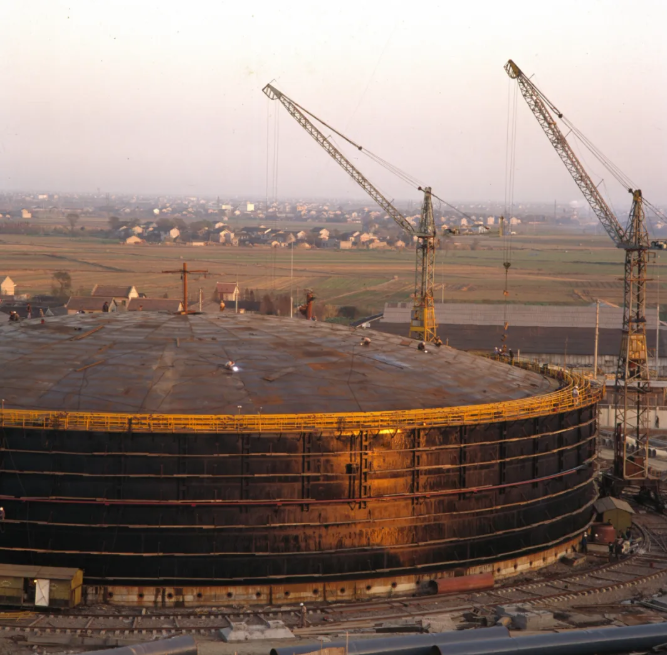
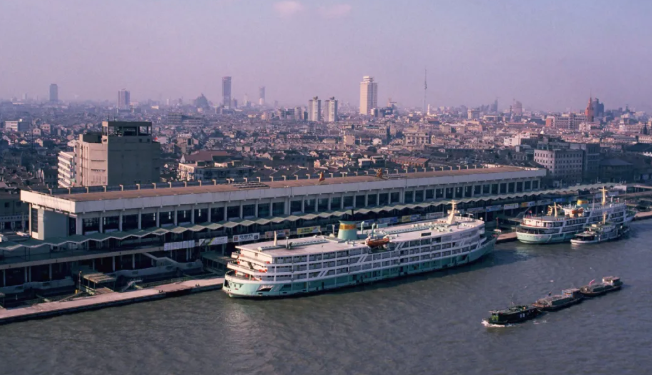
To address the lagging state of urban infrastructure, Shanghai undertook a series of major construction projects. The city expanded the Shiliupu Passenger Terminal and successively completed the Hongqiao Airport terminal building along with more than a dozen mid- and high-end hotels. It also launched several key projects, including the Telecommunications Building, the new Shanghai Railway Passenger Station, as well as the Hu-Jia and Xin-Song expressways and the Yan’an East Road River-Crossing Tunnel.
The year 1985 also marked a pivotal moment in China’s economic reform. Rural reforms in the suburban areas of Shanghai advanced in three major steps. First, the household contract responsibility system was implemented, greatly boosting farmers’ enthusiasm for production. Second, the commune system was dismantled, completing the separation of government administration from communal management. Third, the city strengthened its agricultural service system. In addition, reforms were carried out to adjust the state’s unified procurement and distribution system for agricultural products.
Urban economic reforms centered on enhancing the vitality of state-owned enterprises. Starting with the expansion of enterprise autonomy, Shanghai introduced profit retention and later shifted to a profit-tax reform model. Enterprises gradually gained more independence in planning, production, supply and marketing, as well as labor and personnel management. Various forms of internal contract management systems were promoted, and the factory director (or manager) responsibility system was piloted in more than 600 enterprises. In line with the principle of distribution according to labor, diverse experiments were conducted to reform wage systems.
In the circulation sector, the city established more than 400 trading markets of various types, liberalized the prices of non-staple foods and small commodities, and gradually built a multi-channel, less-layered distribution network. While maintaining the dominant role of the state-owned economy, Shanghai actively encouraged the development of collective enterprises, private businesses, Sino-foreign joint ventures, and wholly foreign-owned enterprises. Meanwhile, reforms in the science-technology and education systems were also progressively introduced.
During the “Sixth Five-Year Plan” period, Shanghai achieved a total GDP of 187.124 billion yuan, with an average annual growth rate of 9.1 percent. The city’s total industrial output reached 350.915 billion yuan, growing 7.7 percent annually on average. Fiscal revenue amounted to 108.92 billion yuan, an average annual increase of 5.8 percent. Shanghai’s total export volume reached 18.008 billion USD. Economic development steadily shifted toward a model centered on improving economic efficiency, with both macro- and micro-level performance showing notable improvement. Per capita GDP rose from 2,738 yuan in 1980 to 3,855 yuan in 1985, an increase of 40.8 percent.
Meanwhile, the daily lives of Shanghai residents were undergoing even more visible changes, with living standards improving significantly. Data shows that the average annual living expenditure of worker households increased from 560 yuan in 1980 to 1,012 yuan in 1985. After adjusting for price inflation, real income grew by an average of 8.6 percent per year. The average annual net income of rural households rose from 402 yuan in 1980 to 806 yuan in 1985. The per capita annual consumption level of all residents increased by 45.4 percent over five years—an average annual growth rate of 7.8 percent—far exceeding the 2.8 percent annual average recorded over the 28 years since the First Five-Year Plan. By the end of 1985, residents’ savings deposits reached 7.01 billion yuan, 1.3 times the amount recorded at the end of 1980.
Shanghai in 1985 stood at the dawn of the reform and opening-up era. The Huangpu River remained the city’s spiritual core—its shimmering waves reflecting Shanghai’s future. The Suzhou Creek, still bearing a heavy load, bustled with lively docks and fleets of large and small vessels weaving through its waters, supplying the city with endless energy. The aspirations and expectations of the era surged forward like the steady flow of its “one river and one creek,” carrying Shanghai toward a new chapter of transformation.
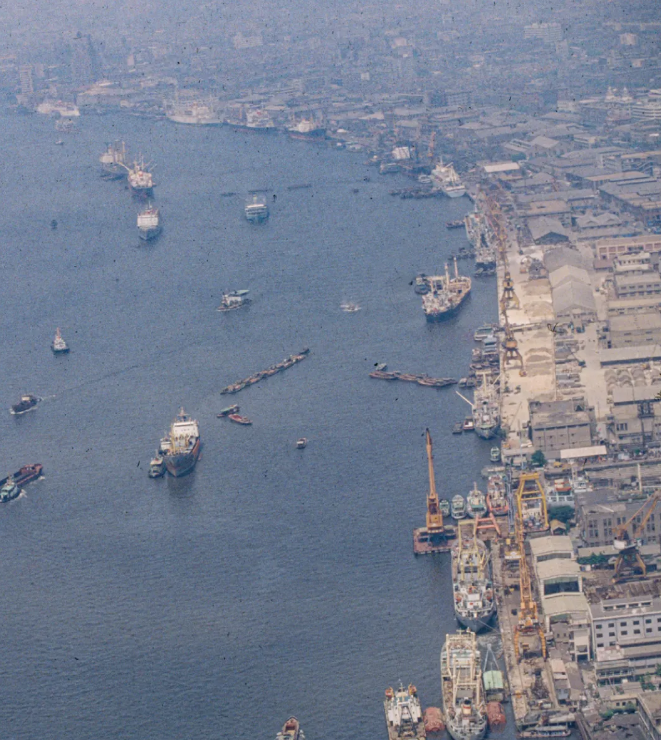
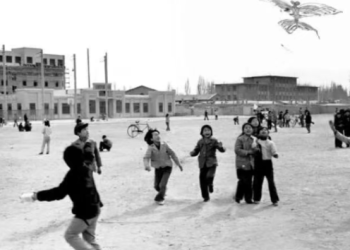
In those years, the sprawling lanes of shikumen stone-gate neighborhoods were still the dominant urban landscape, preserving a strong sense of everyday life. Children played and chased one another through the narrow alleys, while neighbors lived as warmly and closely knit as the cups of homemade soy milk shared between them.
When night fell and the neon lights began to glow, the entire city seemed to take on a dreamlike sheen. Colorful billboards illuminated the faces of young people, reflecting their longing—and determination—for a future filled with endless possibilities.
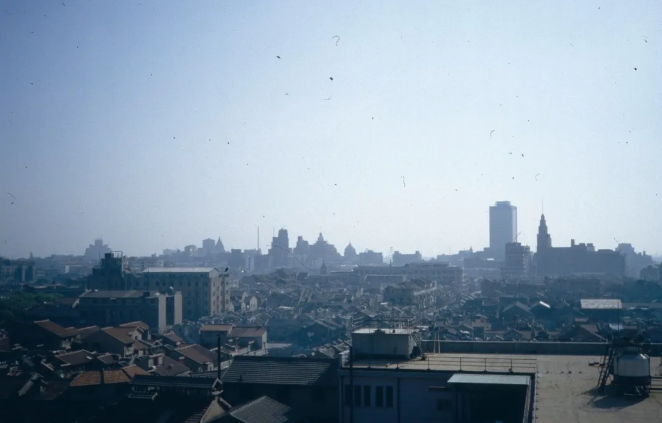
In 1985, Shanghai was still far from enjoying the material abundance and cultural richness that would come decades later, yet people carried smiles on their faces almost every day. According to the city’s statistics that year, the distribution of young people mirrored the overall population: 2,947,741 lived in the urban districts—an all-time historical peak, accounting for 57.42% of the entire city—while 2,184,803 lived in the suburban counties, making up the remaining 42.58%.
This surge of youthful energy came from a steadfast belief in the future and a courage unburdened by fear. Although the road of development was anything but smooth, every individual pushed forward relentlessly, striving for their own dreams, never once backing down. It was this very spirit that shaped Shanghai’s resilience and enduring charm.
That same year, Pudong was already gathering momentum. In February 1985, the State Council approved the Outline Report on Shanghai’s Economic Development Strategy, which clearly stated: “Focus development toward the Hangzhou Bay region and the northern and southern wings along the Yangtze River. Create the necessary conditions to develop Pudong and plan for the construction of new urban districts.”
The spring breeze of reform swept across this land, drawing the attention of people from all directions. Here, individuals pursued their dreams and yearned to change their destiny. That spirit of perseverance—unyielding, determined, and full of ambition—became a powerful force that propelled the entire city forward.
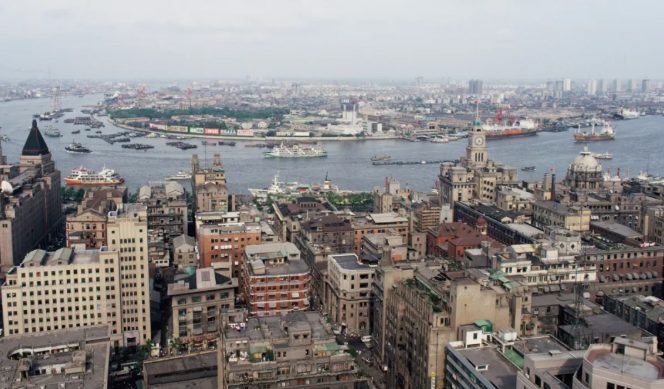
Today, standing in 2025 and looking back at Shanghai in 1985, one cannot help but feel a deep sense of emotion and respect. Forty years have passed in the blink of an eye. Yet the city’s spirit—“embracing diversity, striving for excellence, staying open-minded and wise, remaining modest yet magnanimous”—still shines with unmistakable clarity.
History continues to surge forward like a mighty current, but as a city filled with dreams and hope, Shanghai’s underlying character has only grown more vibrant. With a firm focus on building the “Five Centers” as its core mission and strategic direction, the city has consistently enhanced its overall capabilities. Shanghai’s role as a high-level symbol and bellwether of China’s reform and opening-up has become even more pronounced.
The city’s iconic “one river and one creek” have taken on a new radiance, forming an urban waterfront belt that dazzles with renewed vitality. Urban renewal projects have further optimized and expanded development space. The quality of everyday life has continued to improve, and citizens’ sense of fulfillment, happiness, and security has steadily risen year after year.
May this beloved city of ours continue to write new chapters of brilliance in the years to come.