In 1985, a single misjudgment cost China trillions, and a great aviation pioneer died with regret.
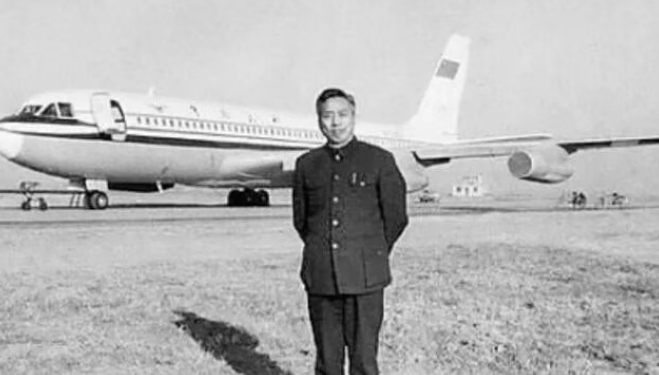
On September 26, 1980, China’s first domestically developed large jet airliner—the Yun-10—completed its maiden flight in Shanghai. After nearly half an hour in the air, it landed successfully.
In the following months, the Yun-10 flew to Beijing, Harbin, Guangzhou, and several other cities, demonstrating its impressive performance and reliability.
However, due to a number of reasons, the Yun-10 project was eventually shelved. Later, because of a critical misjudgment, China paid a price of at least several trillion yuan. And Ma Fengshan—the chief designer of the Yun-10—passed away with deep regret.
In war, the importance of air superiority needs no explanation; it is often the decisive factor that determines victory or defeat. This is why, in the early years after the founding of the People’s Republic of China, the country placed exceptional emphasis on the development of its aviation industry.
And when speaking of China’s aviation industry, one name cannot be ignored—Ma Fengshan.
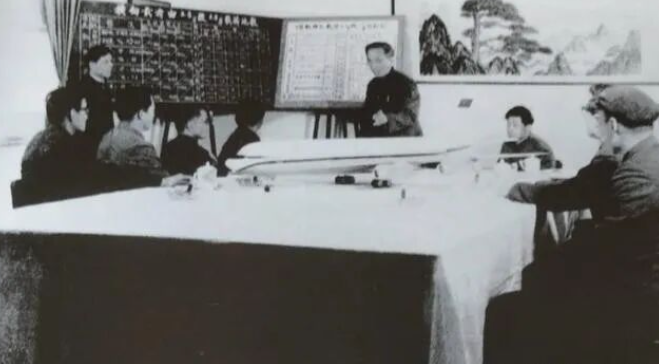
Born in 1929 in Wuxi, Jiangsu Province, Ma Fengshan was among the first generation of aircraft chief designers trained by New China. It is no exaggeration to say that his life spanned—and shaped—half of China’s aviation history.
When the country was founded in 1949, Ma Fengshan had just graduated from high school at the age of 20. By today’s standards, graduating at 20 seems a bit late, but one must remember that he was born in 1929—during a time of war and turmoil. In those years, receiving formal education at all was already difficult, let alone completing high school.
After graduation, Ma Fengshan made a resolute decision: he enrolled in the Department of Aeronautical Engineering at Jiaotong University, embarking on a systematic study of aviation technology.
His decision was deeply connected to his childhood experiences.
When the War of Resistance Against Japan broke out, Ma Fengshan personally witnessed the Japanese military aircraft invading Chinese airspace. He saw with his own eyes the brutality and indiscriminate killing carried out by the invaders—a trauma that interrupted his schooling more than once.
Ma Fengshan came to recognize that if a nation wished to avoid being bullied, it needed strong national defense, and aviation was a critical pillar of that strength.
After three years of study at Jiaotong University, Ma Fengshan graduated early in 1952 and was assigned to Harbin Aircraft Factory.
At that time, China had just been founded, industries were in ruins, and advanced technologies were severely lacking. Harbin Aircraft Factory did not yet have the ability to manufacture aircraft; it was essentially a “repair workshop.”
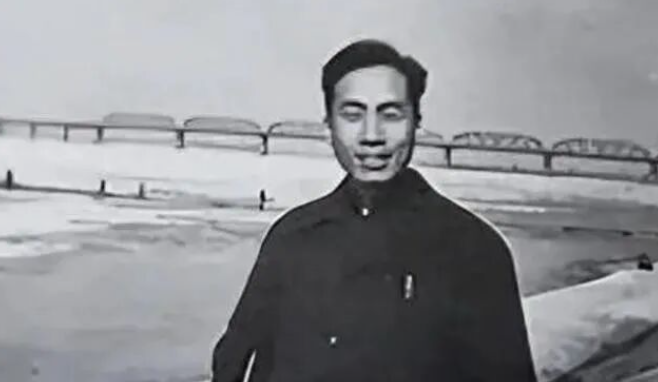
But with Ma Fengshan’s arrival, things began to change.
Through practice and self-study, he quickly grew into a leading technical expert, helping the factory achieve the leap from “zero” to “one.”
In 1958, he became the chief designer of the factory’s design office and participated in the conceptual design of the Peace 401 short-range jetliner and the 402 turboprop aircraft.
His outstanding performance earned him a rare opportunity: in May 1959, he was selected to study in the Soviet Union.
Ma Fengshan traveled to Kazan—a major hub of Soviet aviation—and interned at the production facility for the Tu-16 bomber.
However, his stay lasted only four months. In September 1959, he was forced to return to China.
Why forced? Because the geopolitical landscape had changed dramatically…
The deterioration of Sino-Soviet relations began in the mid-1950s, as the two nations grew increasingly divided in military and diplomatic affairs. By the late 1950s, tensions had escalated sharply, and relations plummeted.
After the founding of the PRC, the Soviet Union had sent many experts to aid China’s development, but in 1960, all Soviet experts abruptly withdrew. Consequently, Chinese personnel studying in the Soviet Union could no longer remain either.
It was because of this geopolitical rift that Ma Fengshan was forced to return to China.
During their internship in the Soviet aircraft factory, Chinese students encountered an unusual rule imposed by Soviet instructors: they were not allowed to take notes during classes.
The Soviet side claimed that all teaching materials and lecture content would later be provided in printed form to China. But once the Chinese students returned home, the promised materials never came.
China attempted diplomatic negotiation, but the Soviets responded with a flimsy excuse:
“These materials are not included in the Tu-16 cooperation agreement. Therefore, we cannot provide them.”
Anyone with common sense could see this was merely a pretext. The real reason was simple: Sino-Soviet relations had collapsed.
Most students, trusting the Soviets, complied with the no-notes rule and focused solely on listening. But as the saying goes, “The palest ink is better than the strongest memory.” Expecting them to memorize all the advanced aircraft knowledge was unrealistic.
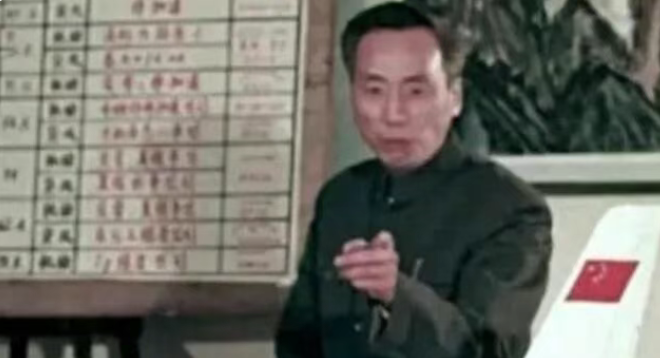
But Ma Fengshan was different.
Before traveling to the Soviet Union, he had squeezed out time to learn Russian. During class, he secretly took notes—recording technical diagrams, structural formulas, and critical data into a small notebook.
This notebook contained invaluable information about the Tu-16, including its overall structure, strength calculations, static test data, and flight performance parameters.
For many years afterward, the content of this notebook was classified as Top Secret.
In 1961, Ma Fengshan received a rare promotion from First-Class Technician directly to Associate Engineer—a significantly high technical rank at the time.
During this period, China was developing the H-6 strategic bomber—the largest aviation project in the country.
While the H-6 was based on the Soviet Tu-16 design, the sudden withdrawal of Soviet support left China without essential technical data. At this critical moment, Ma Fengshan’s “forbidden notebook” became the key to solving countless engineering problems.
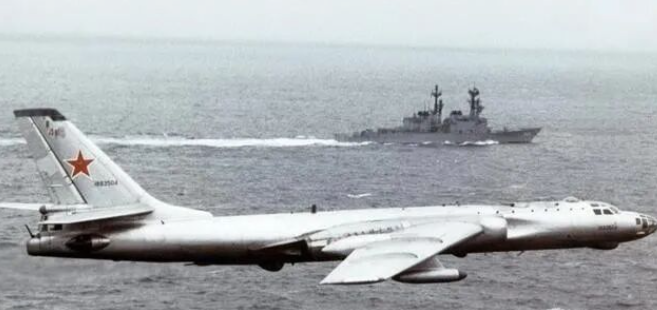
The notebook contained reports such as:“Static Strength Test Observations of the Tu-16 Aircraft”\“Structural Analysis of Converting the Tu-16 into the Tu-104 Airliner”
These documents provided vital theoretical foundations for China’s H-6 program.
It is no exaggeration to say:Without Ma Fengshan’s notebook, China’s H-6 bomber might have been delayed for many years.
On October 16, 1964, a thunderous explosion shook the western region of China. The country’s first independently developed atomic bomb—code-named “Miss Qiu”—successfully detonated.
This historic achievement symbolized China’s emergence from the nuclear shadow of the United States and the Soviet Union.
But this led to a crucial question:Having an atomic bomb is not enough.
How do you deliver it?
The answer was clear:The H-6 bomber.
Through Ma Fengshan’s efforts, the H-6 was modified to meet the exacting requirements for carrying nuclear weapons. With this capability, China officially became a true nuclear power.
Despite these monumental accomplishments, Ma Fengshan never grew arrogant. Instead, he threw himself into a new challenge:
The development of China’s first large jet airliner—the Yun-10.
But during the development of the Yun-10, something heartbreaking occurred…
In the 1970s, China had virtually no experience in building large transport aircraft. But Ma Fengshan did not shrink from the challenge. Instead, driven by determination and confidence, he once again stepped into uncharted territory.
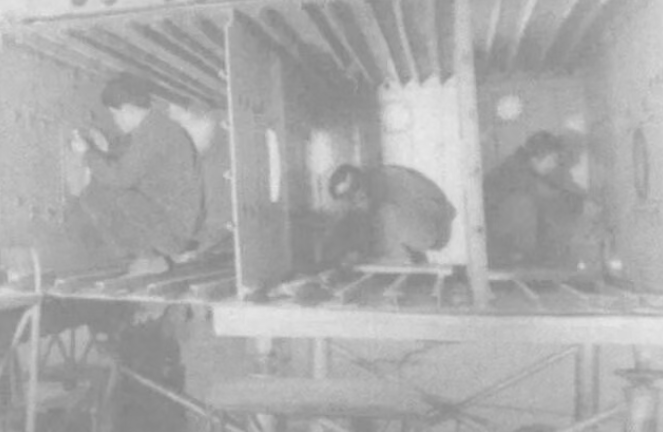
In July 1970, during the Preparatory Meeting for the Development of a Large Transport Aircraft, eight key design criteria were established:Seating capacity of around 100 passengers;Modification based on the H-6 airframe rather than a completely new design;Installation of three or four engines;A range of 5,000 kilometers;
Cruising altitude of 10,000 meters;Maximum speed of around 1,000 km/h;All-weather flight capability.
This envisioned large transport aircraft was named the Yun-10 (Y-10).
Ma Fengshan believed that the Y-10 could use the H-6 as its structural basis. This would allow China not only to inherit proven technology and shorten development time, but also to reuse certain H-6 components—making maintenance easier and more efficient.
On November 8, 1970, Ma Fengshan arrived in Shanghai and led a team of designers to begin full-scale development on the Y-10.
The team absorbed the world’s advanced aircraft-design concepts of the time. They introduced tapered wings, which significantly reduced aerodynamic drag. They also mounted the engines beneath the wings, which improved weight distribution and substantially reduced noise.
If you look closely, you can even see trumpet-shaped airflow regulators installed on the inner wing section—an innovative design to reduce aerodynamic shock and enhance stability.
After ten years of hard work, Ma Fengshan’s team achieved a breakthrough.
On that historic day at Shanghai’s Dachang Airport, the Y-10 completed its first successful flight.
In terms of overall performance and key indicators, the Y-10 did not lag behind large jetliners produced by other countries. For this achievement, Ma Fengshan deserved immense credit.
The Y-10’s maiden flight drew global attention. Reuters commented:
“Now that China has mastered such advanced technology, the world can no longer regard it as a backward country.”
But despite the triumph, the Y-10’s destiny would prove to be turbulent.
In 1985, due to interference from foreign corporations, combined with China’s shortage of funding and other internal pressures, the Y-10 project was forced to halt.
Ma Fengshan could not bear to watch ten years of effort—and China’s first jet airliner—be abandoned.
To save the project, he traveled tirelessly, pleading, negotiating, and seeking solutions in every direction he could.
But in the end, he failed.
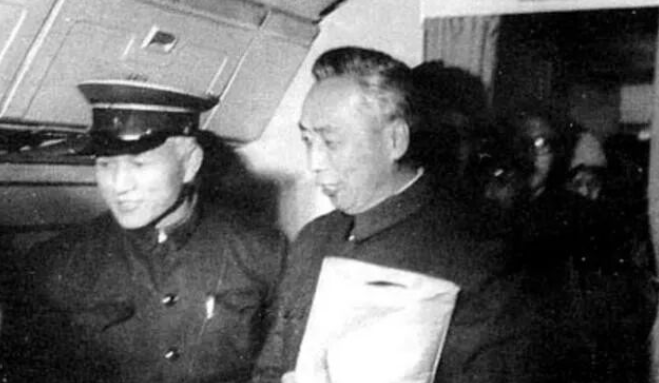
The Y-10 could not be rescued. The aircraft that represented a decade of China’s perseverance and innovation was never allowed to enter mass production.
To keep pace with global aviation, China’s civil aviation administration had no choice but to collaborate with foreign companies.
They chose McDonnell Douglas, the American aerospace manufacturer.
But China made a fatal misjudgment.
McDonnell Douglas’s technology suffered from severe structural limitations and safety issues. In the end, the company was absorbed by Boeing.
The consequences were devastating:
China suffered huge economic losses, estimated to be worth trillions today.China’s civil aviation development fell behind for many years.Foreign aircraft manufacturers seized the market gap and dominated China’s skies.
As the old saying goes:
“A single misstep can lead to a thousand years of regret.”
For Ma Fengshan, the blow was even more personal.
On April 24, 1990, Ma Fengshan passed away in Shanghai from illness, at the age of 61.
If one were to ask what his greatest regret in life was, the answer would undoubtedly be:
The tragic end of the Y-10.
Yet, no matter what happened later, the fact remains:China successfully built a large jet airliner in the 1980s.
This means that China had the capability to reach the world’s top level of aviation manufacturing.
Future generations owe it to pioneers like Ma Fengshan to continue achieving breakthroughs.
No matter how one views the past, China’s achievement in developing a large jet airliner in the 1980s stands as undeniable proof of one thing:
The Chinese people had — and still have — the capability to bring the nation’s aviation industry to the forefront of the world.
For that reason, it is the responsibility of later generations to deliver accomplishments truly worthy of honoring the pioneers of China’s aviation cause.