Music, as an important audible medium recording the development of an era, has long carried countless unforgettable and cherished memories for generations of listeners. For a very long time, it has served as a vessel of emotion, nostalgia, and collective identity. Especially after China’s Reform and Opening-up, when a wave of Hong Kong and Taiwanese pop music swept across the mainland, those melodies greatly enriched people’s spiritual and cultural lives.
Throughout the 1980s, the classic songs of the Taiwanese campus-folk movement found their way deep into mainland China through various channels—radio broadcasts, cassette tapes, traveling musicians, cultural exchanges, and word-of-mouth among students. These melodies resonated with the hearts of countless young scholars who were yearning for expression, dreams, and emotional freedom.
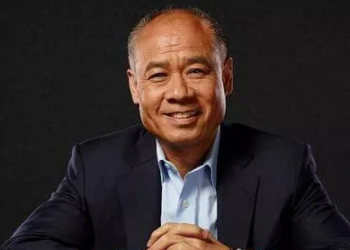
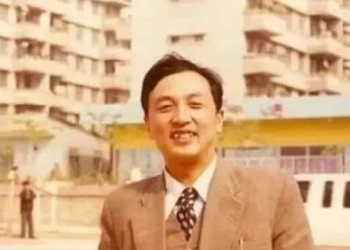
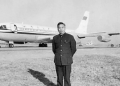
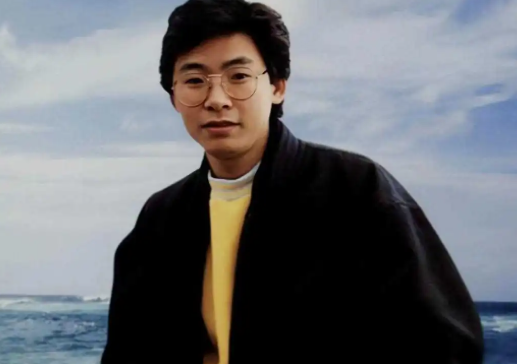
Cheung Ming-man was born in Hong Kong to parents who were both overseas Chinese. Yet it was not until the age of six that he first learned where his roots truly were—that the land facing Hong Kong across the sea was the birthplace of his ancestors and the home of his cultural inheritance.
As he grew older, Cheung Ming-man became a worker in an electronics factory, a humble and ordinary job shared by many young people of that era. But because he had loved singing since childhood, he frequently took part in a variety of singing competitions. Music was not merely a hobby; it was a hidden flame waiting for the right moment to ignite.
In 1979, at the age of twenty-three, Cheung Ming-man won two consecutive championships in the “Hong Kong Workers’ Singing Contest” and the “Hong Kong Amateur Singing Competition.” His outstanding voice caught the attention of Deng Bing-hang, the owner of Eternal Records, who signed him and helped him release his first solo album, The Country Road However, the album’s sales were far from ideal.
At that time, Deng Bing-hang sharply sensed the potential of the mainland market and decided to experiment by having Cheung Ming-man record Mandarin albums instead of Cantonese ones. The results were immediate and unmistakable—Mandarin albums sold significantly better.
This success greatly boosted Cheung Ming-man’s confidence and strengthened his desire to become a singer who could represent the soul of his heritage—a national singer in the truest sense.
But he did not expect that a single event was about to change the course of his destiny completely.
In 1982, Margaret Thatcher—the British Prime Minister known to the world as the “Iron Lady”—visited China, attempting to rely on the so-called “three treaties” to continue Britain’s occupation and control of Hong Kong. However, in China, the Iron Lady suffered an unexpected setback. China delivered a firm and unequivocal response: on the Hong Kong issue, there was no room for negotiation; sovereignty was not a matter open to discussion.
After multiple rounds of consultations, the two sides finally reached a consensus based on the principle of “One Country, Two Systems.” When the talks concluded, the always-proud Margaret Thatcher unexpectedly slipped and fell in front of both domestic and international media—a moment that became widely reported and symbolically marked the fading of her once unshakable political aura.
Yet just as countless Chinese citizens were celebrating this diplomatic achievement, Japan stirred new controversy by making a foolish and gravely misguided decision. In 1982, Japan’s Ministry of Education announced revisions to school textbooks, attempting to distort history and obscure the brutal truth of Japan’s invasion of China. When this news reached the Chinese mainland, it triggered widespread outrage among the public.
At that time, Hong Kong lyricist and “creative genius” James Wong (Huang Zhan) picked up his pen and wrote the now-iconic line: “Though I wear Western clothes, my heart remains Chinese.” Composer Wang Fuling set these lyrics to music, giving birth to the soon-to-be classic patriotic anthem My Chinese Heart. The two then invited Cheung Ming-man to perform the song and released an album of the same name.
Following this success, Cheung Ming-man went on to release several more patriotic albums, including I Am Chinese, We Have a Name Called China, and Ming-man’s Dragon Affection, among others. Unfortunately, all of these albums sank into obscurity in Hong Kong at the time. Mandarin had not yet become widely used in Hong Kong, and moreover, the colonial Hong Kong government actively obstructed such patriotic works. As a result, Cheung Ming-man’s passionate and emotionally charged patriotic songs failed to gain substantial traction.
Fortunately, this situation later changed dramatically. In 1984, the signing of the Sino-British Joint Declaration officially marked the beginning of Hong Kong’s countdown to returning to China. That same year, the CCTV Spring Festival Gala shouted the slogan “The Two Sides of the Strait Are One Family” for the first time and began seriously considering inviting Hong Kong artists to perform on the national stage.
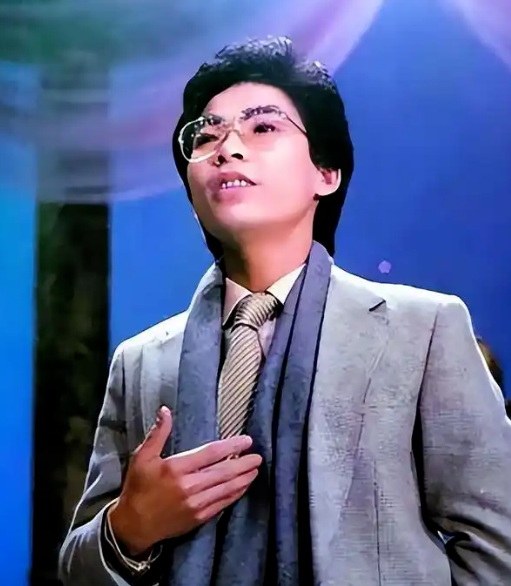
Since there was no precedent, every step—from finding performers to finalizing the program—posed significant challenges for the Gala’s chief director, Huang Yihe. To find the right artist, Huang Yihe traveled across coastal areas in Guangdong. Just when he was about to give up, he happened to hear Cheung Ming-man’s My Chinese Heart being played on a public bus.
However, because Cheung Ming-man’s parents were overseas Chinese, his political review process took unusually long. As time was running out, Huang Yihe, in a moment of desperation, even slammed down the phone on a leader’s secretary—a bold move that finally allowed Cheung Ming-man to appear on the Spring Festival Gala stage.
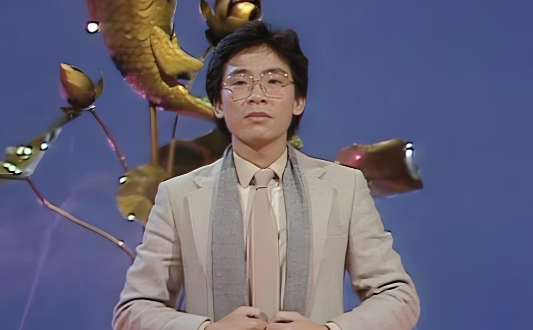
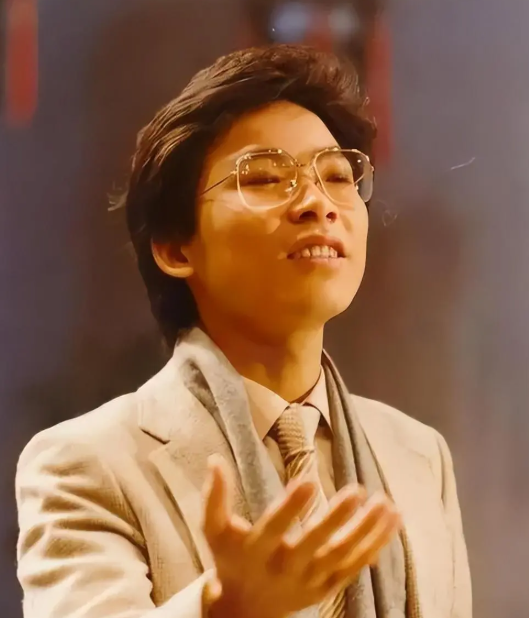
During that year’s Gala, Cheung Ming-man, dressed in a grey Zhongshan suit, performed four songs in succession and returned to the stage twice due to overwhelming applause from the audience. He became one of the most beloved performers of the evening. His rendition of My Chinese Heart touched countless viewers across the country, including Chinese communities overseas.
Cheung Ming-man’s remarkable appearance on the Spring Festival Gala officially opened a new era of cultural exchange among Mainland China, Hong Kong, and Taiwan.
In 1988, at the age of thirty-two, Cheung Ming-man made a life-defining decision: he would dedicate his entire career—and indeed his entire life—to the cause of patriotism. With remarkable resolve, he sold his house and his car, then traveled to Mainland China to launch an intense, almost unbelievable series of concerts. Yet these performances were not intended for his own profit. Instead, they aimed to promote and raise funds for the very first Asian Games to be hosted in Beijing.
Over the course of a single year, Cheung Ming-man held 154 concerts across more than twenty cities. At the peak of his touring schedule, he performed twelve concerts in just five days, and on one extraordinary occasion, he even completed three concerts in a single day. This near-superhuman record remains unmatched even today. Not even Yang Kun—who once bragged about performing “thirty-two concerts”—has come close to surpassing Cheung’s achievement.
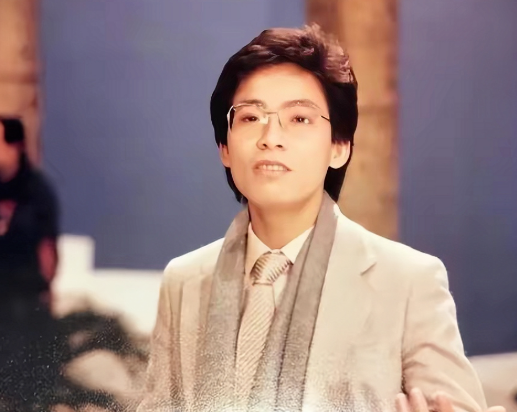
When the tour first began, ticket prices were as low as 0.35 RMB. But because the concerts became overwhelmingly popular, prices gradually increased to 3 RMB per ticket. In the end, the tour generated 600,000 RMB, every cent of which Cheung Ming-man donated to the organizing committee of the Beijing Asian Games.
Through his voice and his unwavering passion, Cheung not only promoted the Asian Games but also played a significant role in deepening cultural exchange across the Taiwan Strait and within the broader Chinese-speaking world.
When asked why he chose to dedicate so much of himself, an early statement of his offers the clearest explanation“I belong to this fertile land. I belong to this great nation.
I love our motherland, and I wish to be a national singer.
To sing for her with my whole heart—for a lifetime, forever—is my greatest happiness.”
The deep patriotism and profound sense of national pride conveyed in his music resonated powerfully with the social atmosphere of the time. His works became an enduring source of motivation and emotional strength for an entire generation. Even more than forty years later, this album continues to exert a far-reaching influence and stands as a classic that cannot be ignored.