Huawei’s founder, Ren Zhengfei, once joked about himself: “I don’t understand technology, and I understand management even less.”
Yet when we look back through the pages of history, a very different Ren Zhengfei emerges. In 1984, People’s Daily published a short but striking news report titled “China’s First Air-Pressure Balance.”
The report was brief, but its lines of bold black type carried weight:
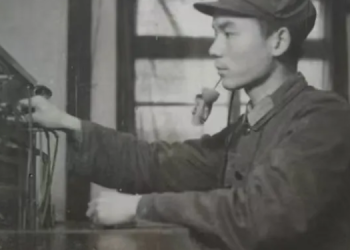
“Ren Zhengfei, a young technical officer of a certain unit in the People’s Liberation Army’s Infrastructure Engineering Corps… has developed China’s first high-precision air-pressure measuring instrument.”
Many people later described both Ren Zhengfei and Huawei as possessing a kind of earthiness and military grit—character traits synonymous with discipline, endurance, and relentless pragmatism.
Ren, for his part, accepted the praise wholeheartedly.
But the truth is more nuanced.
Ren Zhengfei was born into a scholarly family in Guizhou. His mother, Cheng Yuanzhao, was a senior teacher who spent her entire life educating students and nurturing countless young talents.
Ren was the eldest of seven siblings. Beneath him were six younger brothers and sisters. Though the family was rich in “spirit” and learning, they were often short of food, clothing, and the essentials of life.
As the eldest son, Ren often carried the weight of the family on his shoulders:
“There were seven of us children, plus our parents—nine mouths in total. All depending on my parents’ meager salaries.”
Even the most capable adults would struggle under the financial burden of supporting nine people.
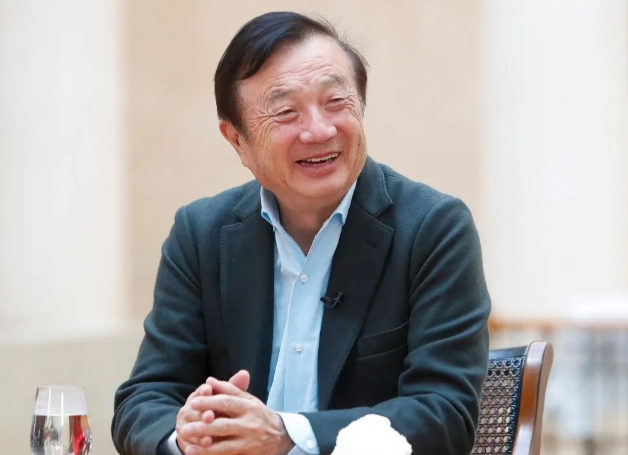
Ren recalled with a mix of humor and hardship:“We were growing taller every day. Growing was good, of course—but the trouble was that our clothes grew shorter every day. And on top of that, my brothers, sisters, and I all needed to attend school…”
After Huawei began to find its footing and earn recognition, Ren Zhengfei rarely appeared at award ceremonies. When asked questions such as “Where do you find your sense of achievement?”, he simply replied:
“What I feel more often is frustration and a constant sense of crisis. Every moment is spent thinking about what comes next.”
It was just like when he was the eldest son of his family—he would think endlessly before buying even a book or a single shirt.
“In the summer, the weather was scorching hot, yet a classmate once saw me wearing a thick cotton coat. He told me to ask my mother for a shirt. But how could I bring myself to say that? If I had one, my younger brothers and sisters would only have it harder.”
Ren Zhengfei never told that classmate that, back then, several siblings still shared the same blanket at home.
After the college entrance exam, Ren Zhengfei was admitted to Chongqing University to study civil engineering.
“I still remember this: even during years of famine, my mother never favored anyone. With seven children, she divided the food evenly—she would rather go hungry herself. But as my exam approached, she would occasionally slip me a tiny corn cake in secret. I think that little sweet cake played a big part in helping me get into college.”
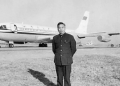
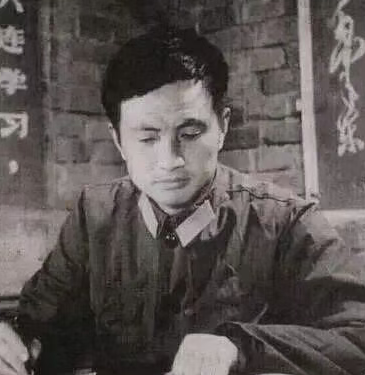
According to national policy at the time, Ren Zhengfei should have spent several years as an ordinary farmer or factory worker after graduation. Yet he was undeniably fortunate. Despite his father’s history of political struggle, Ren’s exceptional grades allowed him to join the army. He was assigned to the Corps of Engineers, becoming a technical serviceman.
During his years in the military, Ren Zhengfei spent what he later described as the most stable and pure fourteen years of his life. He once admitted,
“Why did I join the army? Most of us were the same—we didn’t have any grand reasons. We just wanted to temper ourselves, to gain inner peace through hardship.”
As his body was hardened, his mind underwent a parallel transformation. While serving, Ren Zhengfei immersed himself in extensive reading—political economy, philosophy, and classic works such as Selected Works of Mao Zedong and Das Kapital. He was even recognized as a model soldier in studying Mao’s writings.
“Not good at technology”? A humble understatement: He helped create China’s first air pressure balance
Ren Zhengfei’s claim of “not understanding technology” was, in truth, modest self-deprecation. In the Corps of Engineers, he was among the best.
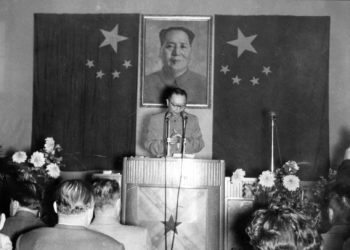
In 1977, his unit held a major work conference in Beijing, attended by more than a thousand key leaders and exemplary figures. On October 24, national leaders—Hua Guofeng, Deng Xiaoping, Ye Jianying, Li Xiannian, and others—received the outstanding representatives, honoring a large group of engineering and technical pioneers.
Among them were notable figures such as:
-
Zhang Shigang, the “Hoisting King” who achieved construction miracles at Liaohe Chemical;
-
Li Wanshan, the technician who successfully developed new electronic photo-colorimeters;
-
Cheng Zuming, the model soldier who helped build the Mao Zedong Memorial Hall;
—and Ren Zhengfei, the developer of China’s first air-pressure balance.
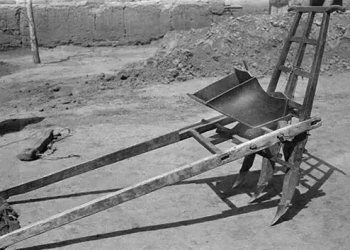
This instrument carried enormous significance for scientific research and industrial inspection. Previously, China’s measurement departments and instrument factories could only rely on single-tube pressure gauges filled with water or mercury, or standard double-tube piston manometers. Both had drawbacks—cumbersome to operate, slow to measure, and requiring repeated verification.
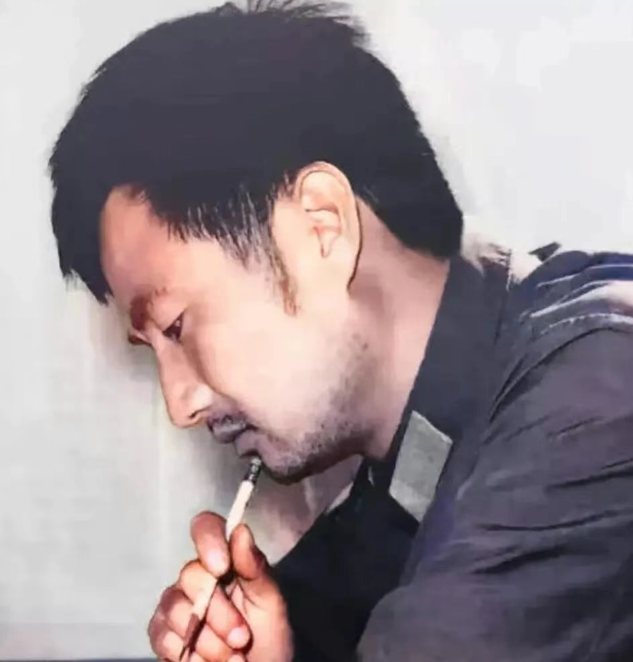
The air-pressure balance developed and repeatedly refined by Ren Zhengfei and his fellow soldiers offered clear advantages:
It was smaller, lighter, more accurate, easier to operate, and importantly, it helped eliminate mercury hazards and improve working conditions for technicians.
Most critically, at that time, only a handful of advanced industrial nations had the capability to produce this instrument—even in small quantities. Ren Zhengfei’s work filled a major gap in China’s high-precision industrial measurement tools.
Later, the news article originally published in Wenhui Daily was repeatedly reprinted, and in 1984 it appeared once again—this time on the front page of People’s Daily.
In 1982, thinking of supporting his wife and child and caring for his aging parents, Ren Zhengfei gave up an excellent opportunity to transfer to a military research institute. By 1983, he had decided to retire from the army altogether. He joined a subsidiary of Shenzhen Nanyou Group. His more than a decade of military life had forged in him a character both firm and gentle. In Ren Zhengfei’s own plan, keeping this well-paid job, supporting his siblings, and honoring his parents already amounted to a good life.
But fate had its own designs. In the China of the 1980s, there were countless “blind spots” where rules and systems had yet to catch up with rapid development. During one business interaction, Ren Zhengfei was deceived, leading to a 2-million-yuan loan that could not be recovered. At a time when the average monthly salary in the city was only a few dozen yuan, that amount—adjusted for real purchasing power—was no less than 100 million yuan today.
Ren Zhengfei was subsequently dismissed from Nanyou Group and lost his job. But with enormous debt on one side and the responsibility of feeding a family on the other, he did not collapse under pressure. Instead, he showed extraordinary resilience and quickly pulled himself back together.
In 1988, with 21,000 yuan he had borrowed, Ren Zhengfei gathered several like-minded technical professionals and founded Huawei in Shenzhen’s Nanshan District. At the time of its founding, the entire company consisted of only 14 employees.
In its earliest days, Huawei’s main business was distributing program-controlled switches manufactured by a Hong Kong company. Why start with distribution? Ren Zhengfei had his own reasoning:
“Back then, China’s program-controlled switching technology was almost a blank slate. This meant there would be huge demand in the future. And we couldn’t keep selling other people’s products forever—there would be no future in that.”
Ren Zhengfei poured almost all available funds into developing Huawei’s own technology. Before long, the company successfully developed its C&C08 switch, marking Huawei’s first major technological breakthrough.
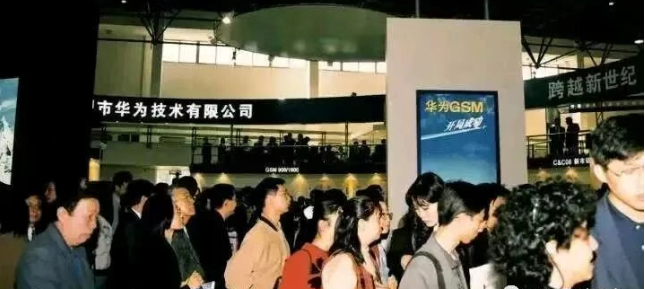
With its technological foundations gradually laid, Huawei began walking the difficult path of independent research and development. At the same time, Ren Zhengfei started contemplating how to open up markets for the young company. His inspiration came from Selected Works of Mao Zedong. Although he had left the army years earlier, this classic remained a book he kept close at hand.
At that time, Huawei’s C&C08 switches were priced at only two-thirds the cost of similar products from international giants. This became Huawei’s critical leverage point in challenging established foreign players such as Siemens, Alcatel, Nortel, and Lucent.
While the long-established telecom titans fought fiercely for dominance in China’s major cities, Ren Zhengfei led Huawei to wage battles in smaller county-level markets, capturing territory one stronghold at a time.
He dispatched large numbers of Huawei sales staff across the country, directing them to target county towns—knocking on doors, face-to-face, promoting domestically made switches. In the company’s early years, Huawei employees carried forward the same spirit of “fighting hard battles and enduring hardship” that Ren Zhengfei himself embodied. They had almost no days off, and working late into the night became routine.
It took only one to two years for Huawei’s C&C08 switches to spread across the vast majority of county-level telecommunications bureaus in China. This marked Huawei’s first major victory in the marketplace—its opening shot in a long campaign that would eventually reshape the global telecom landscape.
By the time the foreign telecom giants in China’s major cities finally realized that switch prices were dropping—eventually falling in a near-vertical plunge—it was already too late. When international companies attempted to reclaim market share, the switch market at the county level and below had already been filled with Huawei’s equipment. The ground had shifted, silently but decisively.
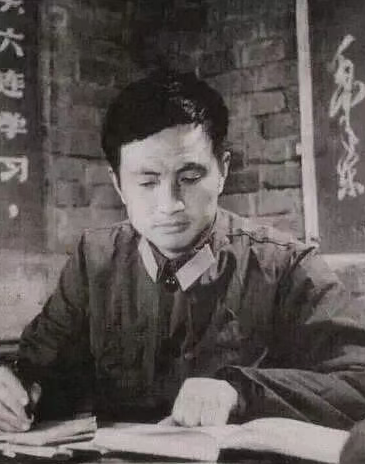
In 1994, at the Beijing International Telecommunication Equipment Exhibition, Huawei deliberately placed its booth inside the international exhibition zone—a bold move for a company still virtually unknown outside China. On both sides of the booth, Huawei hung two bright Five-Star Red Flags, an act that immediately drew widespread attention.
One senior national leader even singled out Huawei for praise:
“This time, Huawei has truly done something that makes the Chinese people proud. It even hung a Five-Star Red Flag in the foreign exhibition area—how dazzling that is.”
That symbolic gesture not only showcased Huawei’s confidence but also marked the moment when the company stepped decisively into the global spotlight. From the county-level battlegrounds to an international stage, Huawei’s rise was no longer just a quiet story of resilience—it had become a declaration of ambition.
After Ren Zhengfei’s “rural-to-urban encirclement” strategy proved highly successful across China, Huawei moved to apply the same approach worldwide. In 1996, the company quietly began infiltrating the European and American telecom markets—slowly but steadily eroding the dominance of Western giants. This marked the beginning of what later became known internationally as the “Huawei Global Siege of Cisco.”
When Cisco sued Huawei, accusing the company of infringing on its intellectual property, Ren Zhengfei responded with characteristic calm and precision. On one side, he hired top-tier American attorneys to confront Cisco directly in court. On the other, he strategically aligned Huawei with 3Com, Cisco’s long-time rival in the United States. The dual-front strategy proved effective: the legal battle ended with Cisco agreeing to a settlement, a conclusion that surprised many Western observers.
From a military technician to the founder of Huawei, from a man burdened with debt to the leader of a global telecommunications powerhouse, Ren Zhengfei’s rise is often summarized by others as:
“He only knows how to distribute money, not technology or management.”
But those who know the story understand that such words are humble self-deprecation, a deliberate understatement by a man who mastered both technology and strategy—but chose never to boast about it.