The characters and which bear the imprints of soil, have become increasingly rare symbols for today’s younger generation. Perhaps even young rural people in their 20s might not be familiar with what “pulling the lòu” and “ing the field” truly mean.
The pronunciation of ” is similar to ” , while is closer to . These words aren’t commonly used, so it’s no surprise if they seem unfamiliar or confusing when encountered. However, in the rural villages of my hometown, when the older generation mentions “pulling the lòu” and “ing the field,” there’s still a gleam in their eyes—these two terms carry the memories of generations past and hold the unique agricultural wisdom of the Central Plains.
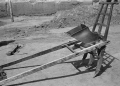
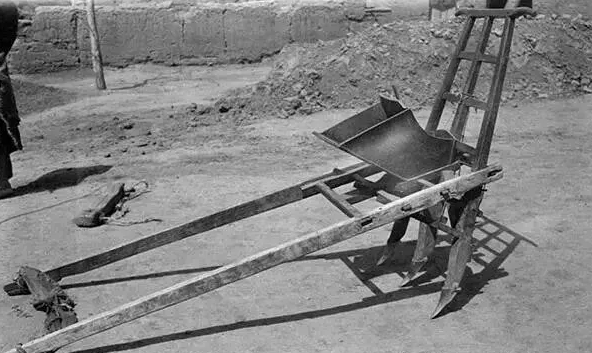
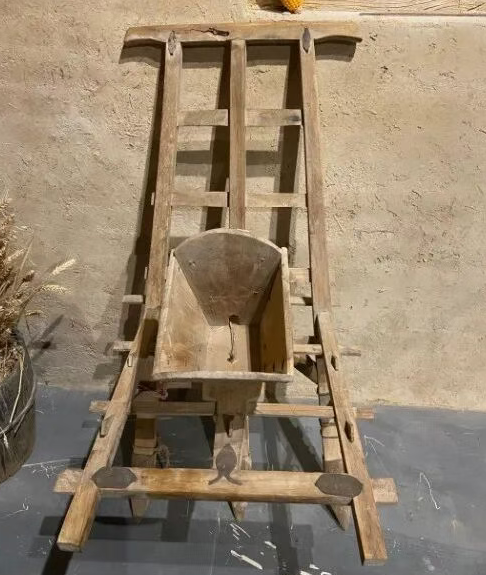
With the widespread use of seeding machines, the age-old practice of “pulling the lòu” and “ing wheat” is slowly fading from the agricultural stage of my hometown, leaving only a faint echo in the quiet villages. The “lòu,” a beloved farming tool of the old times, hides the clever solutions adapted to local conditions.
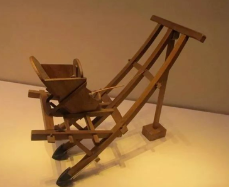
Located on the Yellow-Huaihai alluvial plain, the soil in my hometown is soft but mixed with fine sand and gravel. As a result, the local lòu has a unique design: the wooden frame is slightly wider for greater stability, preventing it from tipping over easily; the bottom of the seed hopper is lined with thin iron to prevent sand and gravel from blocking the seeds; the three legs of the lòu are shorter and sturdier, and the ploughshare is sharpened to easily break through the soil mixed with sand.
Such seemingly simple tools could complete the tasks of digging trenches, sowing seeds, and covering the soil in one smooth operation, helping the villagers in the Central Plains grow crop after crop of wheat.
In my hometown, pulling the lòu anding wheat has never been just a simple chore, but also carries the rules and tacit understanding passed down through generations. Around the time of the first frost in late autumn, it’s the best season foring wheat. Families in the village would usually team up in small groups to head to the fields. The strongest, steadiest laborers would take the lead, pulling the lòu while tightening their belts and holding the ropes with both hands. They would walk slowly along the furrows, stepping rhythmically—too fast, and the seeds would be sown too shallow; too slow, and they would be buried too deeply.
Those with more experience, typically the elders, would assist by gently rocking the lòu. When I was in junior high, I would often help with pulling the lòu during wheat-planting season. At the time, I was too weak and was often teased for not being able to keep the rope from bending.
Grandpa Hei, an expert at rocking the lòu, would often say, “Rocking the lòu isn’t about shaking it randomly; you need to follow the rhythm of the person pulling it. Keep your arms relaxed, and move your wrists as if guiding the seeds.” He would position himself slightly bent forward, gently rocking the lòu in sync with the pace of the person ahead. As a result, the wheat seeds would fall evenly through the hopper into the freshly turned soil.
Grandpa Hei would tell a story about a young man who first learned to rock the lòu. He was impatient and rocked it too fast and too hard, resulting in uneven seeding. Grandpa took him to the edge of the field, placed a handful of wheat seeds in his palm, and said, “You must treat the seeds with care and plant them evenly so they can grow well.” After a while, that young man became skilled and could “rock the lòu as evenly as stars in the sky.”
There was also a custom during sowing: after planting the first row, the villagers would bend down and check the depth of the seeds in the soil. If it was about two fingers deep, they would consider it “just right.” If the depth was uneven, they would adjust the height of the lòu legs until satisfied. After finishing a field, everyone would rest for a while, chatting and catching up on local news, before continuing their work.
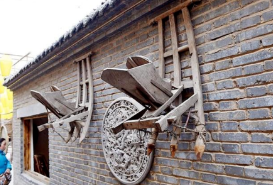
Today, the fields in my hometown have changed drastically. Large and medium-sized seeding machines roar through the fields, completing several acres in a single day—far faster than manual labor. Most of the young people in the village have never seen a lòu, let alone experienced the rhythm of pulling and rocking it. My old lòu, now clean and hanging on the wall in the living room, has become a relic of the past. The wood of the frame is worn smooth by time, as though still telling the stories of the furrows.
Some people may say the disappearance of old farming tools is a regret, but watching the villagers no longer labor in the cold wind, with greater efficiency in harvests, one can’t help but acknowledge that this is an inevitable part of progress. “Pulling the lòu” and “ing the field” may completely vanish from the furrows of my hometown, but the hard work, the tacit understanding, and the respect and love for the land have already taken root in the soil, just like the wheat seeds we sowed.
Whenever we recall the characters and we might also remember the figures of those who rocked the lòu in the fields and think of the years tightly bound to the land—a warm and profound memory belonging to the villagers, and to the entire farming civilization.