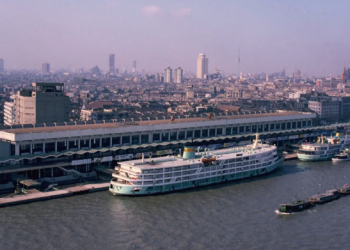
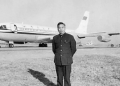
In January 1984, at the age of 33, Wang Shi walked past the Shenzhen International Trade Building, where he saw a large number of police officers. Upon asking, he learned that Deng Xiaoping was inspecting the area. In that moment, Wang Shi realized that an opportunity had arrived.
Wang Shi’s first fortune came from acting as a middleman in the feed industry, specifically in the corn trade. His decision was based on seeing three large metal silos at the Shekou port, which stored corn. Upon further investigation, he discovered that Shenzhen’s feed factories were heavily reliant on importing corn from the United States and Thailand, which made it costly. Wang Shi then struck a deal with Chia Tai, a company that cooperated with him in sourcing corn from the northern regions of China and selling it to the feed factories in Shenzhen. His first deal earned him 39,000 yuan, a modest profit, but for Wang Shi, it opened his eyes to the endless possibilities of commercial trade in Shenzhen.
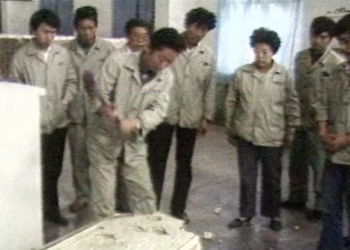
The first year in Shenzhen was the toughest for Wang Shi. As a member of the Guangdong Provincial Foreign Economic and Trade Committee, he had to start from scratch. He wore many hats: group leader, sales representative for animal feed, warehouse worker, driver, and even cashier. Shenzhen in the 1980s was a construction site, with bulldozers and heavy trucks everywhere, raising clouds of dust. Wang Shi led temporary workers unloading corn bags, carrying 150-pound sacks back and forth.
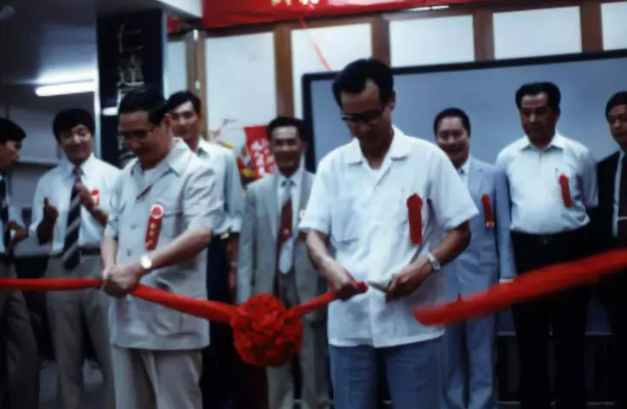
After making a small profit, Wang Shi’s business was suddenly hit by a scandal. Hong Kong media reported that carcinogens had been found in animal feed. This caused a massive disruption, with Wang Shi’s stockpile of corn becoming unsellable. His warehouse was overrun, and corn continued arriving with nowhere to unload it. Desperate, he started selling off the corn at a huge loss, losing 1.1 million yuan.
But rather than retreating, Wang Shi purchased 15,000 tons of corn from Dalian, agreeing to pay for it 100 days after delivery. Just before the shipment arrived in Shenzhen, the media corrected their earlier report, stating that no carcinogens had been found in mainland chicken feed. This timely retraction allowed Wang Shi to recover his losses and even make over 3 million yuan in profit.

Wang Shi saw an opportunity in corn trade, but soon recognized the market was oversaturated as more companies in Shenzhen jumped into the business. Capitalizing on his success, he left the feed industry behind and ventured into importing computers and photocopiers. In May 1984, he founded the Modern Science and Education Instrument Exhibition Center, which would later become Vanke, starting with the import trade of household electrical appliances. He diversified into various industries, including clothing, watches, beverages, printing, and gold jewelry.
In 1986, Shenzhen’s government issued regulations that allowed state-owned enterprises to privatize and issue stock. This was an opportunity for Vanke, which decided to complete a shareholding reform within two years, with the goal of publicly offering shares. Wang Shi also began representing Japanese multimedia equipment brands, such as Sony, and his collaboration with Japanese corporations left a lasting impact, influencing Vanke’s later expansion.
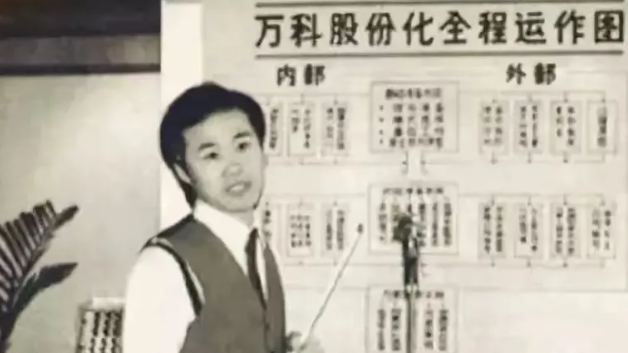
In 1987, Vanke entered the industrial investment field by launching Jing Shi Enterprises Ltd. In 1988, the company officially underwent a shareholding reform, changing its name to Vanke Enterprise Co., Ltd. and went public, raising capital for expansion. The same year, Vanke entered the real estate industry, developing its first project, Tianjing Garden, marking the beginning of China’s real estate boom.
1988 was a pivotal year for China’s real estate industry, as the 13th National Congress of the Communist Party set the goal of privatizing housing as part of broader economic reforms. Vanke was among the first companies to develop commercial housing in China. With the help of external capital, Vanke embarked on a five-year expansion, implementing a strategy of diversification and regional expansion. By 1992, Vanke had expanded into industries like trade and cultural communication, with a presence in 12 major cities across China.
However, in 1993, Vanke decided to refocus solely on real estate. The company exited other industries, including retail, and by 2001, Vanke had completed its transformation into a professional real estate company, shedding its previous diversification model.
From doing whatever was profitable to focusing exclusively on real estate, this transition may be the reason for Vanke’s rise to the top. By narrowing its focus, the company was able to consolidate its strengths and become a leader in the industry.