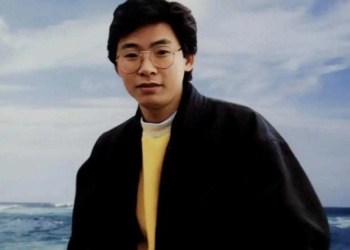
From “Gymnastics Prince” to public enemy, from business legend to the brink of collapse, from reaching the peak of market value to a sudden plummet in stock price — Li Ning’s life story is a powerful lesson in resilience. As he once said, the true champion is not the one who never falls, but the one who can stand up every time they fall.
In today’s world, it is almost commonplace for entrepreneurs to face online harassment. A single misstep, a controversial remark, and they can fall from national idol status to being labeled as the “enemy of the public” or the subject of widespread ridicule. The higher their previous fame and achievements, the more likely they are to endure such harsh treatment. We have seen this with figures like Jack Ma, Cao Dewang, and Yumin Hong, and more recently, the pattern continues…
The onslaught of negative media coverage can be incredibly discouraging. As a result, many entrepreneurs retreat from the limelight — some step back from business operations, others leave social media, delete their accounts, and disable comments.
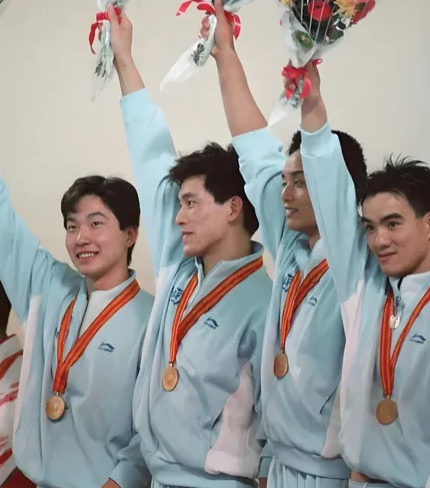
A famous entrepreneur, Song Zhiping, who led two state-owned enterprises into the World’s Top 500, once said, “Resilience is the spiritual foundation of an entrepreneur.” This quote made me think of one person in particular: Li Ning, whose experience of online violence and public scrutiny far surpasses that of most other entrepreneurs. Despite this, his resilience in business truly embodies the essence of Song Zhiping’s words.
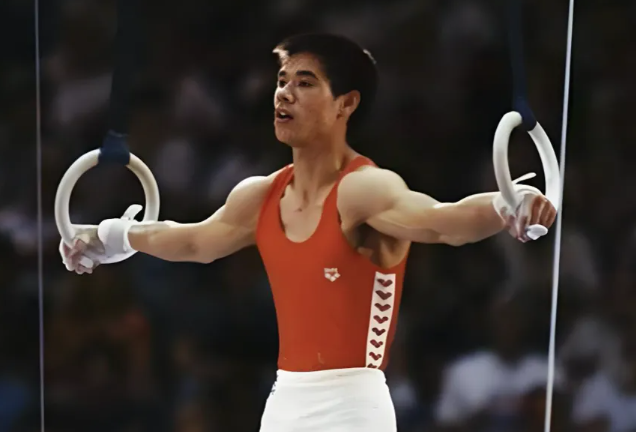
Li Ning’s journey began long before his entrepreneurial story. Born in 1963, Li Ning was a gymnastics prodigy. At the age of 8, he began training in gymnastics, and by 17, he joined China’s national gymnastics team. At 18, he made a stunning debut at the World University Games, winning gold in floor exercise, pommel horse, and rings.
In 1982, at the World Gymnastics Cup, Li Ning won six gold medals and one bronze, an unprecedented achievement that still remains unbroken in the history of gymnastics. This victory marked the beginning of his rise as the “Prince of Gymnastics”, a title that resonated across the world.
Li Ning’s crowning moment came at the 1984 Los Angeles Olympics, where he captured three gold medals, two silver medals, and one bronze, becoming the athlete with the most medals of that Olympics. The American press hailed him as the “Tower of Power” and “Little Giant from the East”. Upon returning to China, he received a hero’s welcome, with thousands lining the streets to cheer for him.
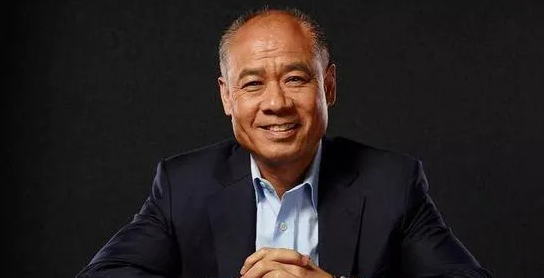
However, just four years later, during the 1988 Seoul Olympics, the Chinese men’s gymnastics team was going through a transition period. Li Ning, past his prime and struggling with injuries, faced immense pressure. His performance faltered, and he made several errors. After the competition, Li Ning was deeply ashamed, telling his teammates, “Brothers, I’m sorry,” before breaking down in tears.
The aftermath was brutal. Li Ning, once hailed as a national hero, was now vilified as a “national disgrace.” Media and the public turned on him, with people mocking him and calling him a failure. Upon his return to China, he deliberately took an isolated route to avoid the crowd, only to be ridiculed by a staff member who said, “Why fall there and not here?”
Li Ning received hateful letters — some sent blades, others bullets, and some even sent ropes, urging him to take his own life. He recalled those days as some of the darkest of his life, and the emotional toll was so heavy that he temporarily lost the will to live.
Despite the intense public backlash, Li Ning was unwilling to accept defeat. His drive to rise again was stronger than ever. He decided to continue working within the sports industry, but this time, he would take a different path. At retirement, he remarked:
“No matter where I go or what I do, I will never leave gymnastics, I will never leave sports.”
Initially, Li Ning considered taking a job as deputy director of the Guangxi Sports Commission, but one person would forever alter his course. That person was Li Jingwei, a businessman with a background in sports. Li Jingwei, who had been pivotal in launching Gatorade-like sports drink Jianlibao and had become an influential figure in China’s reform and opening-up movement, saw immense commercial potential in Li Ning.
Li Jingwei recognized Li Ning’s unmatched athletic background and encouraged him to consider building a business rather than a sports school. With his sharp business acumen, Li Jingwei convinced Li Ning to focus on economic development first and use that platform to promote sports later.
In April 1989, Li Ning joined Jianlibao as Li Jingwei’s special assistant. By 1990, the Li Ning Sportswear Company was founded, with Li Ning serving as its general manager. Li Jingwei used his previous experience to orchestrate a campaign to promote Li Ning-branded sportswear during the 1990 Beijing Asian Games. The first batch of Li Ning sportswear was selected as the official gear for the event’s torchbearers, China’s national team for the medal ceremonies, and foreign journalists.
After two years out of the public spotlight, Li Ning made a stunning return. His brand began to grow rapidly, especially after being selected as the official apparel sponsor for China’s athletes at the 1992 Barcelona Olympics. This marked the beginning of China’s domestic sportswear industry’s rise and propelled Li Ning into the fast lane of development.
By the early 2000s, Li Ning faced a tough market environment. International giants like Nike and Adidas were increasing their presence in China, and local brands like Anta, Peak, and Hongxing Erke began to chip away at Li Ning’s market share.
In 2003, Li Ning lost its top position to Nike in the domestic market, and in 2004, Adidas overtook them for second place.
Li Ning’s company struggled with product design, branding, and a confusing market strategy. They began partnering with external companies to develop high-tech products, but internal mismanagement and confusion over brand positioning led to confusion in the market. Their once-strong reputation began to falter.
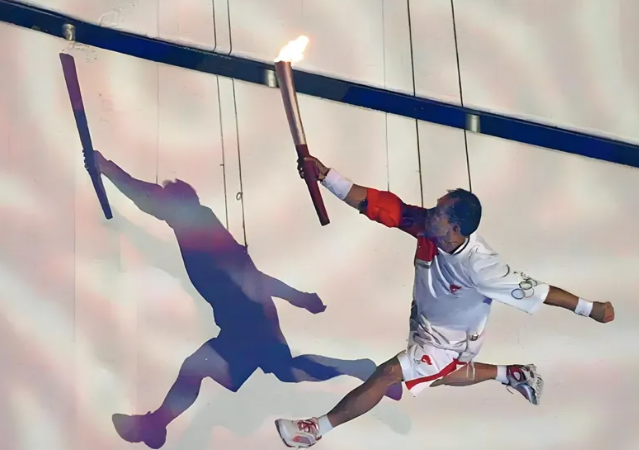
In 2008, during the Beijing Olympics, Li Ning lost the sponsorship battle to Adidas, marking the first time his company was not the official sponsor. However, Li Ning still managed to shine by becoming the torchbearer for the opening ceremony, further solidifying his place in China’s history.
Despite years of struggles, Li Ning’s resilience paid off. By 2015, his company turned the corner. Li Ning began making bold decisions to regain the trust of his customers and revitalize the brand. His “Everything is Possible” slogan returned, signaling his commitment to the brand’s recovery.
Li Ning’s return to the helm gave the company new life. He focused on streamlining expenses, cutting down unnecessary sponsorships, and improving store management. He also diversified into online sales and enhanced product design and development. In 2018, the “China Li Ning” collection at New York Fashion Week stunned the world, and the brand began to resonate with younger audiences, shedding its image of being outdated.
By 2019, Li Ning’s company revenue grew to 13.87 billion yuan, double the revenue of 2014, and net profits rose from a 7.81 billion yuan loss to a 1.49 billion yuan profit. His stock price surged, and by 2021, the company’s market value soared past 280 billion Hong Kong dollars.
Li Ning’s story exemplifies resilience — not just in athletics, but in business. The challenges he faced were immense, but he consistently demonstrated an ability to learn from failure, adapt to change, and rebuild. His perseverance in the face of adversity offers valuable lessons for entrepreneurs everywhere.
In a time when many businesses falter under pressure, Li Ning’s unwavering commitment to change, innovation, and growth serves as a reminder: a resilient entrepreneur doesn’t give up; they evolve, adapt, and keep going.